


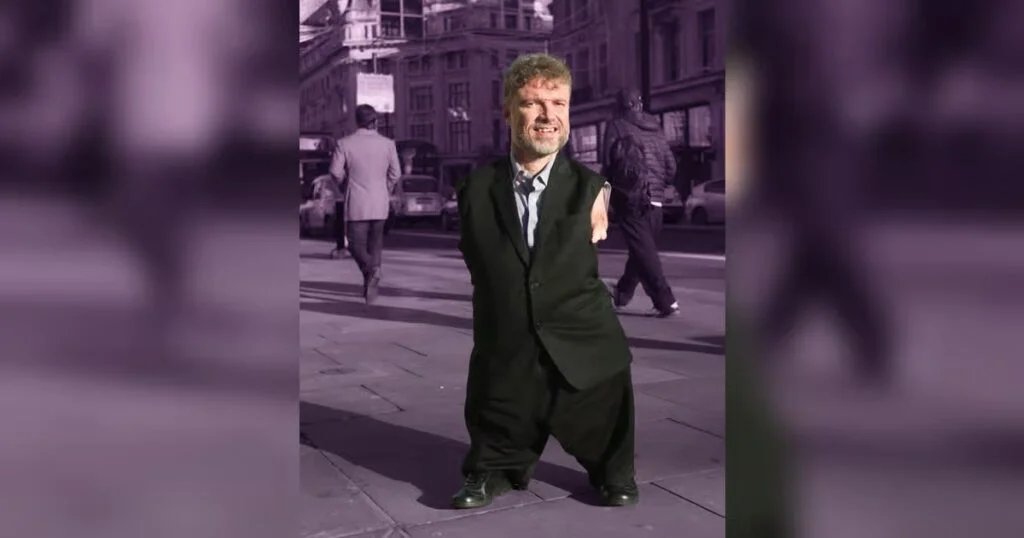
When Mike Adams was born 55 years ago with phocomelia, a rare condition that left him without upper limbs and parts of his legs, doctors advised his parents he should be placed in specialist institutional care away from his family.
By the age of six months, he had been sent to a special school, where he would remain until his teenage years, seeing his parents only occasionally. It was an upbringing, he says, he did not question at the time, surrounded by other children with disabilities and learning to adapt early to a world that was not designed for them.
“I didn’t know any different [life],” Adams said on the sidelines of the Damj Awards in Abu Dhabi. “It was just my normal life.” That early separation from family, he reflects, shaped both his resilience and his later outlook on inclusion.
Stay up to date with the latest news. Follow KT on WhatsApp Channels.
After leaving school at 16, Adams went on to college and university, determined not to define his career through disability. His first encounters with the job market, however, were marked by discrimination; experiences he says ultimately redirected his ambitions.
“I was determined not to end up in a role defined by disability,” he said, adding that he initially wanted a conventional business career. Instead, those setbacks became the foundation for a career in inclusion advocacy and consultancy that has since taken him across industries and international markets.
At the centre of his work is a concept he calls the ‘Purple Pound’, the collective spending power of disabled people and their families, who influence decisions across retail, hospitality, tourism and services. For Adams, the argument is not moral but commercial. Businesses, he says, often underestimate the ripple effect of accessibility: a single customer with a disability may travel with family, influence group decisions, and determine where money is spent across multiple sectors.
“Companies need to see people of determination as customers first,” he said. “Their families make decisions together. Accessibility is not just inclusion; it is demand.” He argues that many organisations still approach disability through compliance or hiring targets, rather than strategy, missing opportunities to improve both customer experience and workforce capability.
“I’d like to see people with disabilities in boardrooms not because of quotas, but because of the value they bring,” he said, adding that lived experience combined with professional expertise remains underrepresented in leadership structures.
Beyond business, Adams speaks candidly about family life. A father of five, he describes prioritising his children’s presence in his daily life, contrasting it with his own upbringing in institutional care. “I wanted my children around me,” he said, noting that he experienced divorce and periods of single parenting while balancing an international career.
He also challenges perceptions around dependency and capability, arguing that society often underestimates what people with disabilities can contribute when barriers are removed. His broader message to governments and businesses is to normalise disability rather than isolate it, through everyday exposure, education and representation in media and public life.
He points to increasing visibility of disability in mainstream content and public spaces as a sign of progress, but says change remains uneven across sectors. For Adams, inclusion is not a standalone initiative but a business principle that cuts across leadership, customer experience and organisational design.
As Abu Dhabi continues to position itself as a regional hub for accessibility and inclusion, he believes the next step is moving beyond policy frameworks toward embedding disability into core economic thinking. “It is about understanding value,” he said. “Not just supporting people of determination but recognising what they already bring to society and to business.”
Source: Khaleej Times