


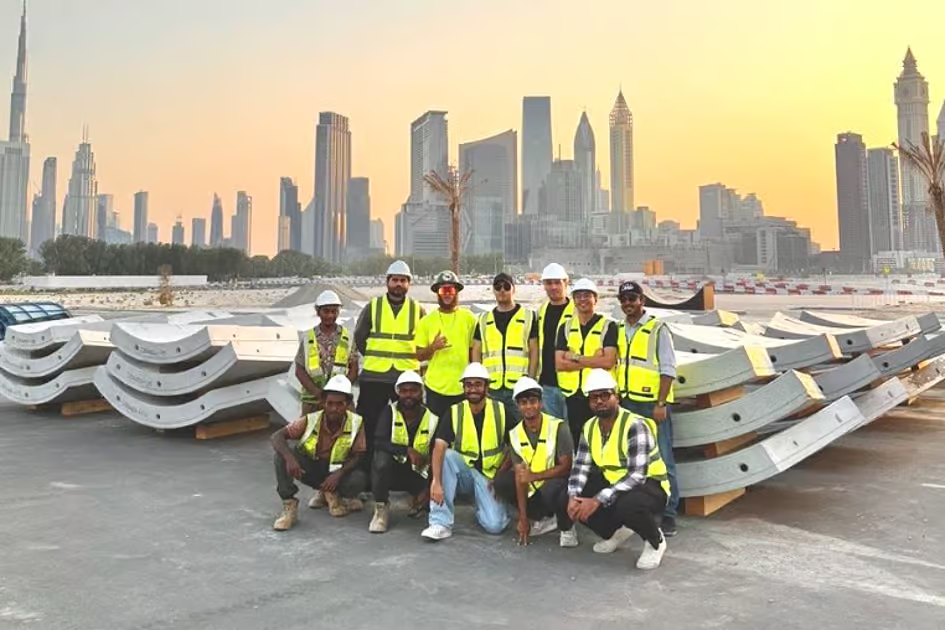
Precast concrete operations for the first phase of Dubai Loop are underway, with the tunnel set to weigh 100 million pounds (45,359,237kg), according to The Boring Company (TBC).
The first phase will utilise 25,000 segments, each weighing 4,000 pounds, the company added.
Dubai has become the second city to introduce this landmark transport project, which features a network of one-directional underground tunnels, and is designed to deliver fast, seamless travel from first mile to last mile.
Stay up to date with the latest news. Follow KT on WhatsApp Channels.
Popularly known as Teslas in tunnels, it was first implemented in Las Vegas. In 2025, Musk compared it to a “wormhole” where one can enter from one part of the city and exit at another.
On the sidelines of World Government 2026, Dubai’s Roads and Transport Authority signed an agreement with Elon Musk’s TBC to begin the passenger tunnel project.
First 4 stations, later expansion
The first phase of Dubai Loop will involve a pilot route extending 4miles (6.4km), comprising four stations, linking the Dubai International Financial Centre and Dubai Mall. These include: Burj Khalifa, DIFC 2, Zabeel Dubai Mall Parking and ICD Brookfield Place.
Later, the project will expand to include up to 14 miles (22.5km) and include 19 stations, connecting the Dubai World Trade Centre and the financial district with Business Bay.
The cost of implementing the first phase of the route is estimated at approximately Dh600 million, and is expected to be completed in one year. The total cost of the full route is estimated at Dh2.5 billion, with 19 stations, and an expected implementation period of around three years.
Dubai Loop to cut traffic
Dubai Loop will ease traffic for residents as it is projected to serve 13,000 people per day in its first phase, while the full route is projected to have a total capacity of approximately 30,000 passengers per day. The tunnel is also expected to cut travel time from around 20 minutes to 3 minutes.
The tunnels will be developed using tech that enables faster delivery, lower construction costs, and reduced impact on existing roads and utilities compared with conventional transport systems, according to a statement by The Boring Company.
Source: Khaleej Times