


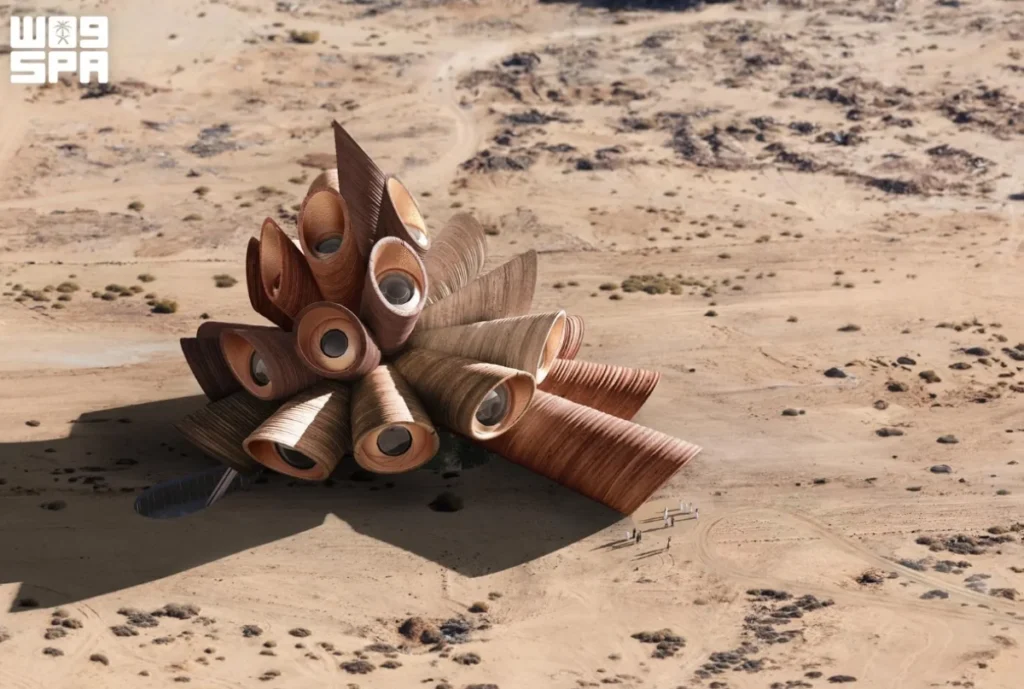
ALULA — The Board of Directors of the Royal Commission for AlUla has approved the design of AlUla Manara, an integrated project that includes an advanced astronomical observatory.
In addition, the manara (“lighthouse”) will house a primary telescope with a diameter of four meters, along with two additional telescopes, each measuring two meters in diameter, placing it among the largest observatories in the world. It will also include a visitor and world-class research center, telescopes, observation platforms, exhibitions, and interactive experiences.
The project — aimed at strengthening the Kingdom’s position within the global scientific community and establishing it as a leader in space sciences — will serve as a cultural and scientific landmark for stargazing and celestial observation, supporting scientific research and astronomical discoveries.
Inspired by AlUla’s natural and cultural landscape, AlUla Manara’s innovative design reflects the region’s historical connection to astronomy.
With the intention of it being an ideal destination for scientists, researchers, and visitors seeking to explore the universe, the facility will be built in harmony with its surroundings — with locally sourced sandstone cladding the building’s exterior — while providing clear views of the night sky and panoramic vistas of the natural environment.
Located more than 70 kilometers north of AlUla between the Harrat Uwayrid Reserve and Gharameel. The site was selected based on criteria assessing suitable levels of light pollution. It lies in an area renowned for its clear night skies.
The commission will collaborate with a range of partners, including the Saudi Space Agency, King Abdulaziz City for Science and Technology, and the SETI Institute, to make AlUla Manara a center for innovation and scientific advancement.
It will also take measures to reduce light pollution by implementing outdoor lighting regulations across AlUla that govern light intensity and direction while minimizing glare and unnecessary light spill.
This approach underscores its commitment to safeguarding dark skies as both a natural and cultural heritage asset, while promoting astronomical tourism and scientific research in a sustainable environment.
The project is expected to attract visitors, scientists, space enthusiasts, and astronomy enthusiasts from around the world, generating both social and economic benefits.
Source: Saudi Gazette