


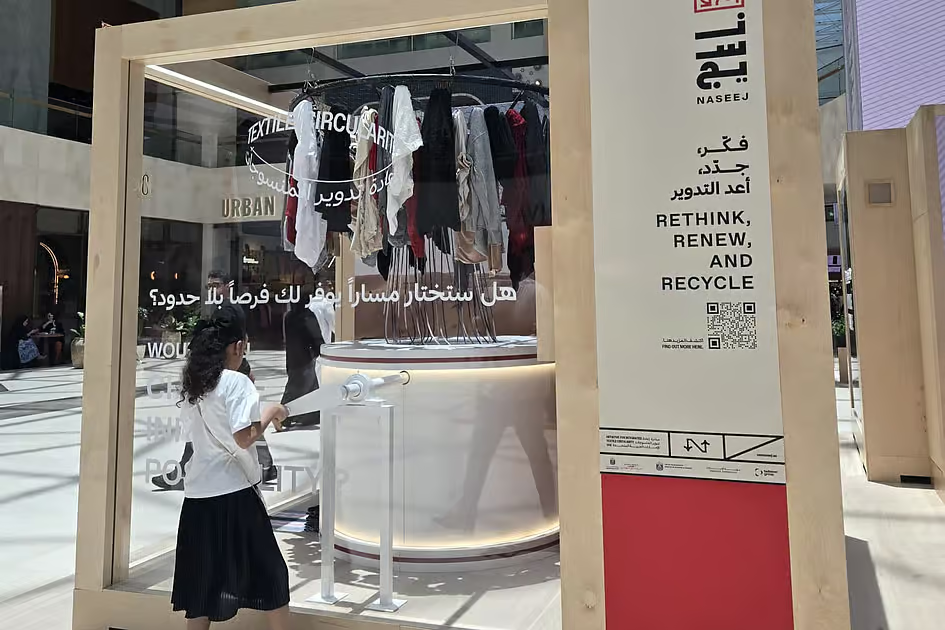
The UAE is aiming to divert 80 per cent of waste away from landfill by 2031, with textile waste emerging as a key focus under a new national circular economy initiative launched this week as authorities work towards closing 11 landfill sites within the next three years.
The push comes as the country generates an estimated 220,000 tonnes of textile waste every year, much of which currently ends up in landfill. According to Tadweer Group chief executive officer Etienne Petit, almost all textile waste generated today ultimately reaches landfill, with only limited recycling taking place.
Through the newly launched Naseej initiative, authorities hope to create dedicated collection systems and recycling pathways for unwanted clothing and fabrics while encouraging residents and businesses to rethink how textiles are used and discarded.
Stay up to date with the latest news. Follow KT on WhatsApp Channels
The programme has already brought together 14 private sector partners, including retailers and manufacturers, to support collection efforts and develop future recycling solutions.
Speaking to Khaleej Times on the sidelines of the launch, Petit said building an effective collection network would be the first step towards creating a functioning textile recycling ecosystem.
“The idea is to establish streams of waste to be able to collect separately,” he said.
Different fabrics require different treatment methods and should be separated before entering the recycling process, he explained.
Petit linked the initiative to Tadweer’s broader waste-management strategy, saying the organisation has been tasked with achieving an 80 per cent diversion rate from landfill by 2031.
“We have 11 landfill to close in three years,” he said.
Collection challenge
According to Petit, the lack of dedicated collection and sorting systems remains one of the biggest barriers to textile recycling.
“Everything is starting by collection,” he said. “It should be the best segregation possible.”
He explained that contaminated or mixed waste significantly reduces recycling opportunities. Textiles that are mixed with food waste or other household refuse often become unsuitable for recycling because the materials can no longer be effectively separated.
“If you have textile plus food plus paper plus cardboard, you will not be able to take it for recycling,” he said.
The same challenge applies to fabric composition. Cotton, for example, is relatively straightforward to recycle, while polyester and blended materials are considerably more difficult and require specialised treatment technologies. “You need to have the proper segregation system,” he explained.
The launch of Naseej comes amid growing concern over the environmental impact of textile waste. According to figures released by the initiative, the UAE consumes around 500 million textile items annually and discards approximately 220,000 tonnes of textiles every year. The initiative estimates that 88 per cent of discarded textiles currently end up in landfill.
The initiative was launched under the directives of President Sheikh Mohamed bin Zayed Al Nahyan and forms part of the UAE’s wider circular economy agenda.
Speaking at the launch, Minister of Economy Abdulla bin Touq Al Marri said textile waste should increasingly be viewed as an economic opportunity rather than simply a disposal challenge.
He noted that the approximately 220,000 tonnes of textile waste generated annually could be transformed into new products, industrial inputs and even materials for other sectors, including construction.
The minister said the initiative aims to encourage residents to separate textile waste from general household rubbish while helping create new industries and manufacturing opportunities centred on textile recovery and recycling.
Collection bags and home pick-up
At its launch activation in Yas Mall, residents were encouraged to take home specially designed Naseej collection bags. Users can fill the bags with unwanted clothing and textiles, scan a QR code and arrange collection, allowing items to be directed towards reuse, donation or recycling streams.
Petit said the next phase of the initiative would focus on identifying the most suitable treatment technologies and infrastructure requirements. “We are going to work with specialists to design technology,” he said. “Textile is specific technology.”
He added that discussions are under way on how future recycling infrastructure could be financed and whether dedicated facilities should be developed locally or through wider regional partnerships.
Despite the challenges, Petit said textile waste still retains value if managed correctly. “All the material is good for something,” he said while discussing examples from Europe, where dedicated textile treatment facilities recover reusable fibres and materials from discarded clothing.
In countries such as Germany, he said, textiles that can be recycled are processed and returned to manufacturers, while materials that cannot be recycled are often used in waste-to-energy facilities to generate electricity.
He also pointed to growing interest from international brands concerned about the environmental impact and reputational risks associated with textile waste.
Petit said the initiative’s next phase would involve testing and evaluating different textile-recycling technologies before deciding on the type and scale of facilities required.
“We are going to work with specialists to design technology,” he said. “The next phase is to find the best way to answer the challenge … and then you can establish the right plant.”
The challenge remains significant. According to Petit, only around one per cent of textiles are currently recycled globally.
For the UAE, the immediate priority is creating collection networks, improving public awareness and ensuring textiles are separated from general waste before they reach landfill.
“The idea is to have a stream from producer, seller, capacity to get back the material and capacity to treat the material,” he said.
Source: Khaleej Times