


[Editor’s Note: For the latest updates on how US-Iran hostilities have escalated since a 14-point deal was signed on June 12, follow the Khaleej Times live blog.]
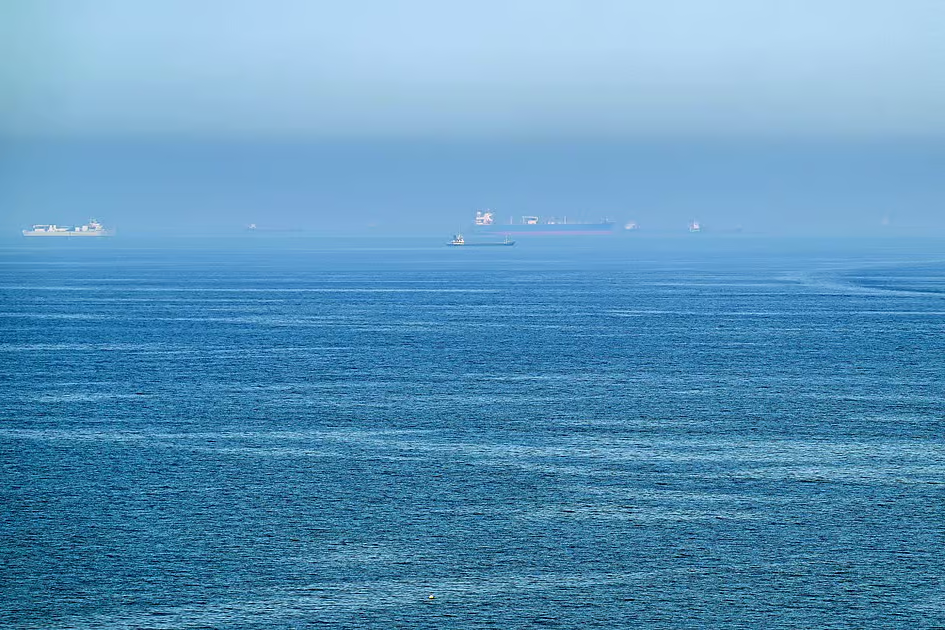
Amid the heightened hostilities in the Strait of Hormuz, The UAE’s Ministry of Defence (MOD) has announce early on Tuesday that national tankers were targeted by two Iranian cruise missiles while transiting the southern shipping lane of the Strait of Hormuz, within Omani territorial waters.
The attack on the Mombasa and the Al Bahiyah, the ministry added, resulted in the death of one Indian crew member aboard the Mombasa tanker and the injury of eight others—four Indians and two Ukrainians. Among the injured, there are four who sustained serious injuries.
Stay up to date with the latest news. Follow KT on WhatsApp Channels.
Beside the fatality and the injuries, the attack also caused material damage to both tankers as a result of the fires that broke out on board. The Ministry of Defence clarified in a statement that the fires have been brought under control.
“The UAE reserves its full right to respond to this escalation and to take all necessary measures to protect its territory, its citizens and residents, in a manner that safeguards its sovereignty, security, and stability, and protects its national interests,” the MOD statment added.
The ministry affirmed the UAE is on the highest level of readiness and preparedness to address any threats, and that it is taking all necessary measures to respond decisively to any attempt to undermine the security and stability of the country. It urged members of the public to refrain from circulating rumors or unverified information, calling on them to obtain information exclusively from official sources.
The latest incidents in the vital waterway come after weeks of heightened tensions since the war broke out on February 28, when the US and Israel launched attacks on Iran.
On July 13, the US military carried out a third consecutive night of strikes against Iran as President Donald Trump reinstated a blockade of Iranian shipping and proposed charging a 20% fee to guard the Strait of Hormuz. Iran’s top joint military command said the US had no role in determining the future of the waterway and would not be allowed to intervene.
The conflict has destabilised the Gulf and spread across the region, with Iran attacking US bases in multiple countries. It has also thrown into question an interim US-Iranian agreement signed last month to reopen the strait and halt hostilities.
Before the conflict began in February, around a fifth of the world’s oil and gas traffic passed through Hormuz daily, delivering more than 15 million barrels of fuel to global markets worth at least $1.2 billion.
UAE strongly condemns attack
In a statement, the UAE Ministry of Foreign Affairs (Mofa) condemned and denounced in the strongest terms the Iranian hostile attacks on the oil tankers, stressing the need for Iran to halt these unprovoked attacks.
Iran needs also to ensure its full commitment to an immediate cessation of all hostilities, and the complete and unconditional reopening of the Strait of Hormuz in order to safeguard regional security, and maintain the stability of the global economy and trade, MoFA added.
The ministry extended its sincere condolences and sympathy to the family of the Indian victim, as well as to the Government and people of India, and wished all the injured a speedy recovery.
It underscored that this Iranian hostile attack constitutes a flagrant violation of UN Security Council Resolution 2817, which affirmed the importance of freedom of navigation, and rejected the targeting of commercial vessels or the obstruction of international maritime routes.
The UAE said that targeting commercial shipping and using the Strait of Hormuz as a tool of economic coercion or blackmail constitutes an act of piracy and poses a direct threat to the stability of the region, its peoples, and global energy security.
Source: Khaleej Times