


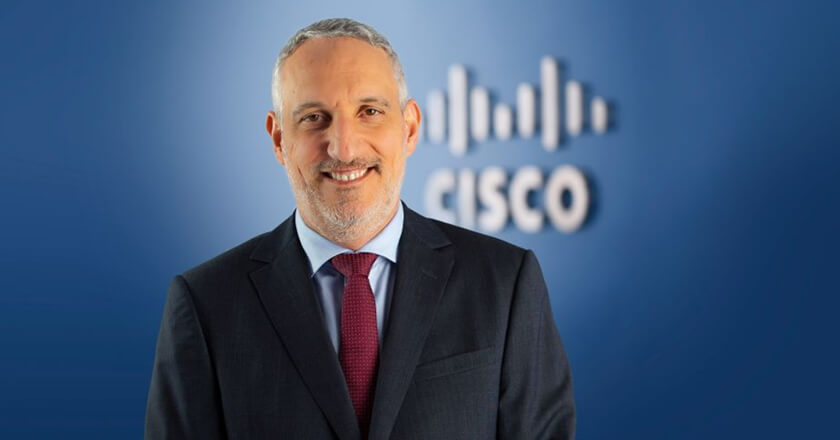
The UAE is among the world’s fastest adopters of AI, driven by strong government policies, heavy investment in digital infrastructure, and widespread enterprise interest.
As the country pursues its National Strategy for Artificial Intelligence 2031, organisations are becoming acutely aware that the unprecedented pace of AI adoption requires them to strengthen cyber resilience at the same pace as innovation.
While AI unleashes immense potential, it also introduces new and complex risks. That’s why cybersecurity is the ultimate enabler of trusted AI, especially in highly-regulated sectors such as government, finance, and critical infrastructure, where digital trust is non-negotiable.
A New Approach to AI Security
As organisations across the country transition their AI initiatives from controlled pilot programs to full-scale enterprise deployment, their IT infrastructures are evolving into multi-cloud, multi-model, multi-stakeholder AI ecosystems. In doing so, they inadvertently expose themselves to a new frontier of vulnerabilities across models, agents and third-party APIs. Securing this complex ecosystem demands a fundamentally new approach because AI disrupts traditional security models. Unlike static software, AI is non-deterministic, often exhibiting unexpected behaviours that can threaten sensitive data or generate harmful advice.
Security teams are facing three crucial challenges. First, they need to address visibility gaps by ensuring a clear view of every AI application, model and dataset. Second, they must continually assess their AI models and applications for their susceptibility to security risks. Third, they must watch out for novel attack vectors targeting runtime applications, such as poisoned models, malicious tools and rogue agents, which existing cybersecurity controls may not be designed to detect.
Protecting the Entire AI Lifecycle
Innovation requires securing the entire AI lifecycle, from build to run. That means giving enterprises the ability to identify, assess and protect against emerging AI risks at every stage, not bolting security on after deployment.
“Building on established network visibility and enforcement controls, an effective approach brings together AI, cybersecurity and threat intelligence to deliver continuous oversight and protection.”
By combining AI supply-chain scanning, runtime protection and deep visibility, it can uncover and mitigate threats in real time, allowing organisations to innovate with confidence while maintaining resilience. This is the principle behind Cisco AI Defense.
Evolving Defenses for the Agentic Era
Agentic AI is transforming how enterprises approach complex work processes. According to Cisco’s recent Campus and Branch research, conducted in partnership with Foundry, 34% of the organisations surveyed in the UAE already have broad enterprise-wide AI agent deployments, and 99% expect an increase in agentic AI use within 24 months. The arrival of agentic AI and the introduction of multi-agent systems expand the AI risk surface even further by bringing new vectors into the equation. These include greater access to sensitive data, autonomous decision-making and complex interactions between human users, agents and tools that blur the traditional lines of identity and access management.
To help address these threats, our solution is evolving to provide purpose-built runtime protections for the complex demands of AI agents, including protections between agents and model context protocol environments. This helps organisations gain greater visibility and control over how agents interact with data, tools and systems.
Securing the Next Stage of the UAE’s Digital Transformation
We are committed to helping build the critical foundation that empowers UAE enterprises navigating the ever-changing digital landscape to scale their AI ambitions securely and confidently. As AI adoption accelerates across government, finance, energy, transport and critical infrastructure, organisations need security architectures that can evolve with this new reality. We remain dedicated to collaborating with government entities, ecosystem partners and enterprise leaders to foster a resilient, trusted environment where AI serves as a secure catalyst for sustainable innovation.
Source: Tahawul Tech