


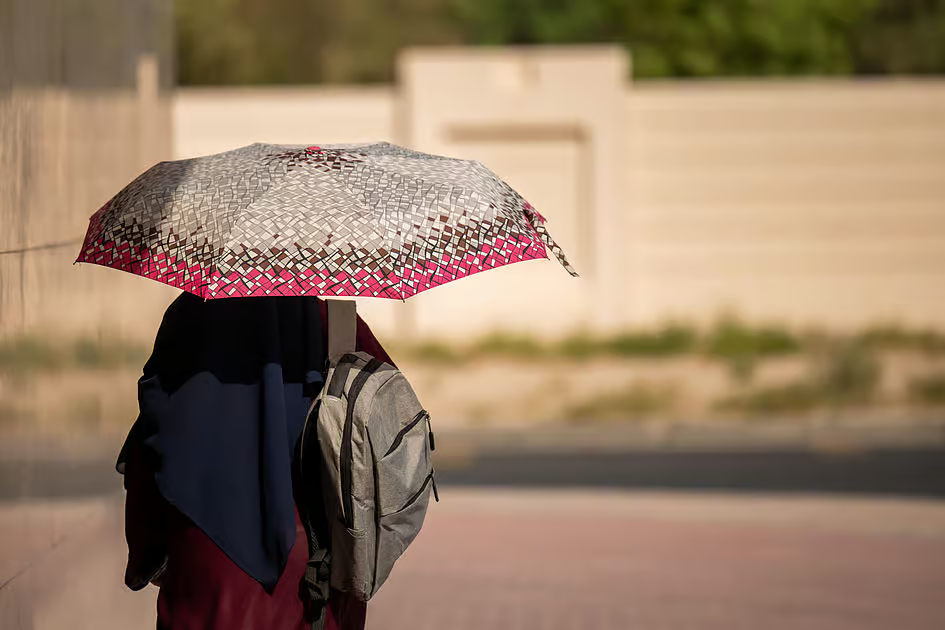
Returning from cooler weather to the UAE’s heat and humidity can leave the body working harder to cool itself while disrupted sleep, hydration and routines can add to post-holiday fatigue, doctors say.
A research published by the National Institute for Occupational Safety and Health (NIOSH) highlights that people who are away from a hot environment for a week or more can lose some heat-acclimatisation adaptations, meaning they may need to gradually readjust when they return.
Similarly, for many UAE residents, returning from a cool-weather holiday comes with an unexpected problem: feeling exhausted just as normal life resumes.
Stay up to date with the latest news. Follow KT on WhatsApp Channels.
Medics highlight that the sudden switch to the UAE’s heat and humidity can put extra strain on the body as it readjusts.
The transition can be even harder when travellers return with disrupted sleep, irregular meals and inadequate hydration. For some people, the combination can make ordinary tiredness feel much more pronounced.
Dr Safaa Fadel, Specialist Family Medicine, Burjeel Medical City, said the body has to work harder to regulate its temperature when moving from a cooler climate into UAE conditions.
“When someone returns from a cooler climate to the UAE’s hot and humid environment, the body suddenly has to work harder to regulate its temperature. In the heat, blood flow to the skin increases, and sweating becomes one of the body’s main mechanisms for releasing heat.”
That extra work can contribute to what many returning holidaymakers describe as a heavy, sluggish feeling, she said, while the body also has to readjust to coping with heat.
“There is also an element of heat re-acclimatisation. Heat tolerance is not permanent. After spending time away from a hot environment, some of the body’s physiological adaptation to heat can be lost.”
Fadel added that the transition is rarely about temperature alone. Changes to sleep and daily routines after travel can compound the effects.
“Jet lag or disrupted sleep can compound the effects of the heat, making a person feel more fatigued than they would from the temperature change alone.”
Why the UAE heat can feel harder after a holiday
Dr Renuka Ramasamy, Specialist Family Medicine, International Modern Hospital Dubai, said returning residents may already be tired or dehydrated before they even step back into the UAE heat.
“Usually it is not one factor alone but several happening simultaneously. In hot, humid conditions, sweating and fluid loss increase, while high humidity makes evaporation of sweat — and therefore cooling — less efficient.”
That combination can produce familiar symptoms such as headaches and dizziness, alongside fatigue and difficulty concentrating.
“Even relatively mild dehydration can contribute to tiredness, headaches, dizziness and reduced concentration.”
Travel can further complicate the adjustment, particularly when sleep, meal times and exercise have been disrupted.
“People can therefore arrive home already tired or inadequately hydrated and then immediately expose their bodies to substantial heat stress. This combination can make the transition more noticeable.”
Ramasamy said some groups need to be particularly cautious, including older adults, young children and pregnant women, as well as people with chronic medical conditions and those taking certain medications. Outdoor workers and people exercising intensely outdoors are also more vulnerable in hot weather.
Doctors advise easing back into routine
Rather than immediately returning to a packed schedule, Dr Shahzadi Saba, Specialist Family Medicine at NMC Medical Centre (Oxford), Abu Dhabi, advised residents to give their bodies time to recover.
“The best thing to do is to make a gradual recovery rather than immediately going back to a demanding routine.”
Regular fluids are important, particularly when sweating increases.
He added, “For the first few days, it is important to drink fluids regularly and to increase the amount taken according to how much sweat is produced. Water will be enough to meet most of the needs that arise during ordinary daily activities.”
For people who have been sweating heavily or for extended periods, electrolyte-containing fluids may be useful, she said, while normal meals or lightly salted snacks can also help.
“After having sweated for a long time or heavily, it may be helpful to drink electrolyte-containing fluids or water taken alongside a normal meal or a lightly salted snack.”
Saba also warned against forcing down excessive amounts of water, particularly during endurance exercise, as overhydration can itself be harmful.
One simple indicator can help people assess their hydration: urine colour. “Pale yellow urine usually indicates that a person is well hydrated,” she said, while noting that medications, supplements and some medical conditions can affect urine colour. Individuals who have heart or kidney disease or who are on a fluid restriction should get personal advice rather than simply increasing their fluid intake.”
Source: Khaleej Times