


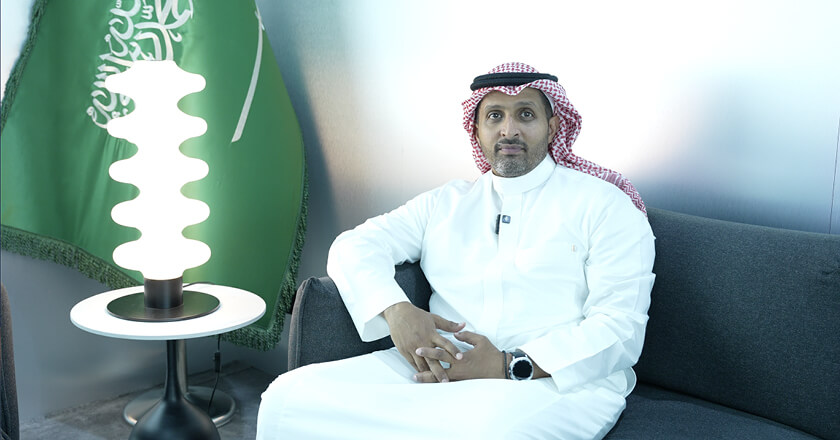
Abdullah Khorami, Chief Business Officer at Etihad Salam Telecom Company (Salam), discusses Salam’s transformation from a telecommunications provider into an integrated digital partner and its role in advancing Saudi Arabia’s digital economy.
Etihad Salam Telecom Company unveiled Salam B2B 2.0 at LEAP 2026, marking its evolution from a traditional telecommunications provider into an integrated digital partner. The strategy brings together connectivity, AI, IoT, cybersecurity, cloud and industry-specific expertise to help enterprises overcome integration challenges and achieve measurable business outcomes. Abdullah Khorami, Chief Business Officer at Etihad Salam Telecom Company, spoke to Tahawultech.com to discuss the company’s customer-led portfolio, its approach to end-to-end digital transformation and the role of smart factory and logistics solutions in supporting Saudi Arabia’s Industry 4.0 ambitions.
Interview excerpts
Salam launched B2B 2.0 at LEAP 2026. What does this evolution mean in practice, and how does it change the way Salam engages with enterprise customers?
Salam B2B 2.0 represents our transformation from a traditional telecommunications provider into an integrated digital transformation partner. Our role is to bridge the gap between what customers need and what technology vendors offer. This repositioning allows us to remain relevant to enterprise customers, understand their business priorities, and deliver solutions aligned with their operational requirements. It marks a shift from selling telecommunications services to building long-term partnerships focused on digital transformation and measurable business outcomes.
Many digital transformation projects struggle to deliver their intended outcomes. Why do you believe enterprises need a digital transformation partner rather than multiple technology vendors?
Research cited by Boston Consulting Group indicates that 77 per cent of digital transformation projects fail to realise their potential value. Several factors contribute to this, including integration challenges, limited access to specialists capable of managing complex deployments and misalignment between technology solutions and business objectives. New technologies and vendors continue to emerge, making it difficult for enterprises to manage multiple providers independently. Organisations need a partner that understands their industry, operates close to the market, and can integrate technologies from different vendors into a complete end-to-end solution. Salam aims to fill this gap through its expanded portfolio, partner ecosystem and understanding of key industry verticals. This approach helps ensure that technology deployments are aligned with the outcomes businesses want to achieve.
Your LEAP showcase spans AI, IoT, cybersecurity and cloud technologies. How do these capabilities come together to deliver measurable business value rather than isolated technology deployments?
Our portfolio was developed through surveys and discussions with customers, vendors and technology partners. We used these insights to select products and services that can be integrated into cohesive solutions. Most of the technologies showcased at LEAP can work together to address specific business requirements. The focus is not on selling individual products based solely on their features.
“Salam combines AI, IoT, cybersecurity, cloud and connectivity capabilities to deliver integrated outcomes aligned with each customer’s operational and strategic objectives.”
Industry 4.0 is a major focus area for Saudi Arabia. What role can solutions such as Salam’s Smart Factory command centre play in helping the Kingdom accelerate industrial modernisation?
Smart factories, smart buildings and intelligent logistics systems can operate as part of an interconnected industrial ecosystem. Salam’s Smart Factory solution uses industrial IoT sensors to collect operational data and provide owners and decision-makers with relevant information at the right time. Integrating this capability with smart logistics solutions can help organisations monitor equipment, manage its movement and improve delivery operations. AI and other digital technologies can further support logistics planning, asset visibility and operational decision-making. These integrated capabilities can help industrial organisations improve efficiency and advance Saudi Arabia’s Industry 4.0 ambitions.
The theme of Salam’s participation this year is “Powering What’s Next.” What does that vision look like for Saudi Arabia’s digital economy over the next decade?
Saudi Arabia’s digital economy is expanding rapidly. Its contribution to GDP has increased significantly and is expected to approach 20 per cent by 2030. Salam wants to contribute to this growth by developing new solutions, introducing advanced technologies and opening its infrastructure to vendors and partners seeking to bring innovation to Saudi Arabia. The Kingdom has established clear performance indicators that can be translated into practical technology projects. Companies seeking to succeed in the market must understand these national priorities, select the right partners and combine the appropriate technologies and services. Salam intends to support this journey through innovation, collaboration and integrated digital solutions.
Source: Tahawul Tech