


WASHINGTON — US President Donald Trump has said he is considering withdrawing Todd Blanche’s nomination to be attorney general as his confirmation appears stalled in the Senate amid resistance from two Republican senators.
Blanche, who has been acting in the role since April, needs the support of all Republicans on the Senate Judiciary Committee for his confirmation to advance.
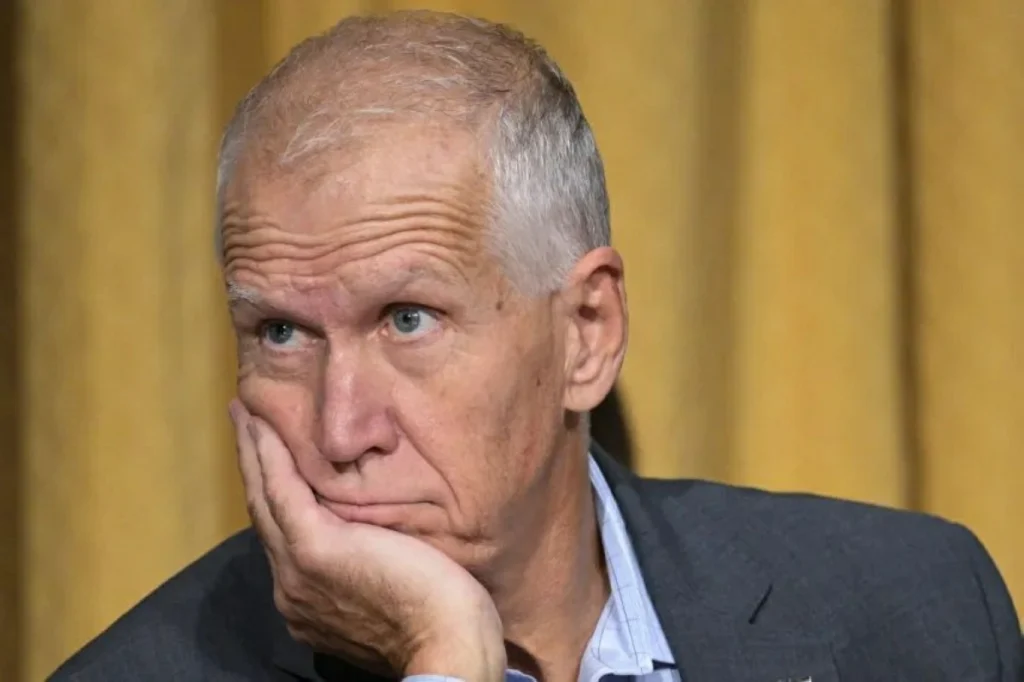
However, Senators John Cornyn from Texas and North Carolina’s Thom Tillis, whose terms both expire in January are withholding their support over the status of a controversial fund to compensate Trump allies.
Trump said he could renominate Blanche after Cornyn and Tillis, the primary voices of opposition, have left the Senate in the new year.
“I have no objection to temporarily withdrawing Todd’s name, if they do not do the right thing, and putting him back after Cornyn and Tillis are out of office,” Trump wrote on Truth Social.
The president’s announcement puts Blanche’s nomination in even further peril, escalating a battle between the administration and GOP lawmakers over a controversial $1.8 billion “anti-weaponization” fund and an agreement that shields Trump and his family from government action over tax issues.
Cornyn and Tillis met privately with Blanche Thursday afternoon, and three sources familiar with the matter said they made progress, though did not reach a deal.
Cornyn and Tillis have signaled for days they are unwilling to support Blanche’s nomination if the administration does not take action to unwind the fund and modify the settlement agreement, and the nomination cannot move forward without their support.
Cornyn suggested Thursday that he and his North Carolina colleague were not alone. “There are more than just two people who have reservations about the weaponization fund and about the scope of the settlement agreement,” he said.
The Texas Republican lost his primary this spring to Trump-backed firebrand Ken Paxton. Tillis, a frequent Trump critic, decided last year not to run for reelection. Democrats are now pouring money into both races in hopes of flipping the seats blue in their battle to gain the Senate majority.
Trump unleashed harsh criticism of Cornyn and Tillis and said that he had “ended” both of their political careers.
“John Cornyn, of Texas, and Thom Tillis, of North Carolina, both of whom I refused to Endorse, and whose political careers have been ended by my action, are refusing to vote for this Great Nominee, who will remain, in any event, as Acting,” the president wrote.
Pressed on Trump’s suggestion that he and Tillis are opposing Blanche as political revenge, Cornyn responded, “It’s maybe a convenient excuse, but it’s certainly not true,” adding, “we spend too much time talking about personalities up here and not enough about the facts.”
Earlier on Thursday, Cornyn had accused the White House of standing in the way of a deal to help Blanche win confirmation. The nomination hit another major setback Wednesday evening when the Senate Judiciary Committee was forced to postpone a vote to advance it amid resistance from Cornyn and Tillis.
“I think if this were just between me and Todd Blanche, we would have worked this out. But apparently he’s getting some pushback from higher ups at the White House. I don’t know who, but this doesn’t need to be this hard,” Cornyn said on Thursday, declining to say who at the White House he was referring to.
Tillis asserted that someone in the Trump administration was resisting a proposal to kill the fund and modify the language protecting Trump on tax issues because “that same adviser wants to bring it back to life at some point.” Tillis has not specified who he believes that adviser is.
The GOP holdouts are pushing Blanche, Trump’s former personal attorney, to confirm in writing that the “anti-weaponization” fund — which was created as part of an agreement to settle a lawsuit from Trump, some of his adult children and his businesses against the IRS — cannot be recreated.
Cornyn has also been clear he wants Blanche to clarify an addendum to that agreement that offers tax immunity, which would make explicit that it only applies to past tax investigations against the president and those listed on the lawsuit. GOP pushback has also focused on seeking assurances that the immunity shield wouldn’t apply to potential investigations into unrelated past conduct that could still be unknown.
Additionally, two sources familiar the matter said, Cornyn has asked that the agreement be more specific about the “named parties” in the IRS settlement, because the Trump family is involved in hundreds of businesses worldwide, and it is unclear if each of those businesses would then be exempt from investigation.
If Trump were to temporarily pull Blanche’s nomination, he would still have the authority of a Senate-confirmed attorney general despite his acting title. That role has a 210-day limit, though it can be extended while his nomination is pending.
If the president entirely withdrew the nomination, Blanche could still be in charge because he is the deputy attorney general and holds the same power as the head of the Justice Department.
Senate Judiciary Chairman Chuck Grassley said on Thursday prior to Trump’s Truth Social post that it remains his “intention” to get Blanche through his panel.
“Exactly when that can happen, I don’t know, but we’re going to work hard to get the differences worked out,” he continued.
Source: Saudi Gazette