


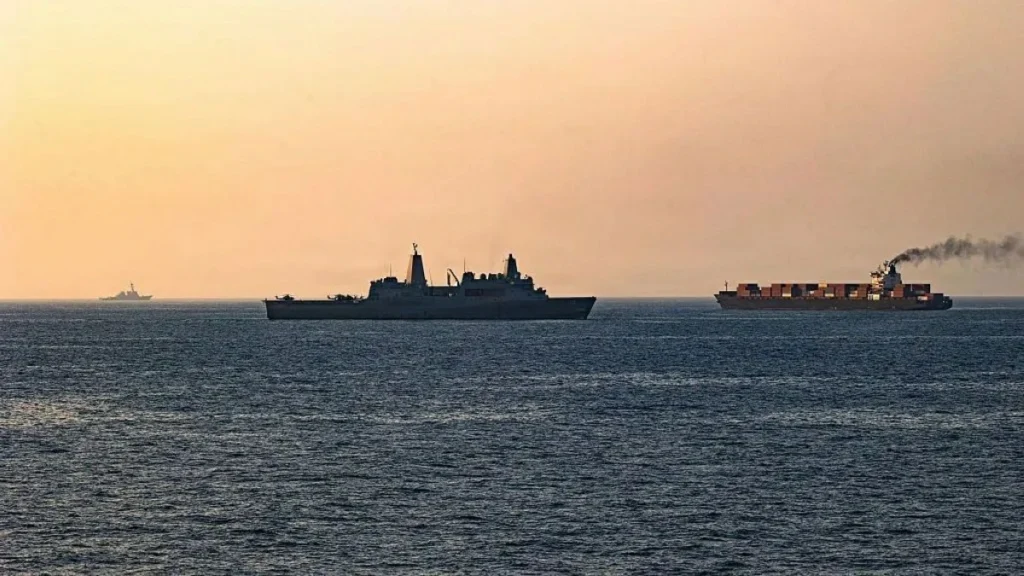
DUBAI — The US military said it began launching air strikes on Iran early Thursday in “a powerful response” to Tehran’s attempted surprise attacks targeting American forces in Jordan and ships in the Strait of Hormuz as the war reignited and again drawing in the Islamic republic’s proxies.
The latest hostilities came a day after the conflict expanded with the first publicly announced joint US-Saudi strikes, which targeted Iran-aligned militias in Iraq, dashing hopes of a return to negotiations after a nearly week-long lull in fighting
“The strikes are a powerful response to yesterday’s attempted Iranian attacks on US forces based in the Middle East,” US Central Command said.
Saudi Arabia and the US also announced strikes Wednesday on militant bases in Iraq, while US ally Israel accused Iran-backed Hezbollah of a truce violation.
For two days, Saudi Arabia has reported drone attacks targeting crude facilities that it blamed on Iraqi armed groups allied with Tehran.
Hours before the announced strikes on Wednesday, US President Donald Trump vowed to retaliate against Iran for their attempted attack on US troops a day earlier.
Trump told reporters at the White House: “We’re going to be hitting them very hard because it’s our turn to hit them.
“They know it’s coming. They asked us not to do it.”
Iran launched missiles at Jordan, with state media later reporting an American attack near the Islamic republic’s border with Iraq.
Iran’s Islamic Revolutionary Guard Corps (IRGC) said it had targeted a US air base and a command center in Jordan “in response to the acts of aggression of the American child-killing army”.
It also said naval forces had struck three oil tankers in the Strait of Hormuz after they “ignored warnings” and sailed along what it described as an “unsafe and illegal route” through the vital Gulf waterway.
Iran’s state television, meanwhile, reported a US strike in the Piranshahr border area, after the Fars news agency reported a missile hit an uninhabited area, causing no casualties.
Earlier, Jordan’s army said it had intercepted five Iranian missiles.
“As long as the threats against the Islamic Republic of Iran continue…the resistance will continue,” Iran’s Revolutionary Guards said.
On another front, Israel accused Hezbollah of deploying a drone overnight against an Israeli vehicle inside Lebanon, in what the military called “a blatant violation of the ceasefire.”
Israel fought alongside the US in the first weeks of the war against Iran, while battling Hezbollah in Lebanon, but it has yet to join the latest round of strikes against the Islamic republic.
US stocks ended sharply lower on the oil price jump Wednesday, while the yield on 30-year US Treasury bonds hit their highest levels since 2007.
In Iraq, a joint US-Saudi air operation followed attacks by what Riyadh called “terrorist militias loyal to Iran” on its oil facilities.
The US military said logistics and weapons sites belonging to an Iran-aligned group were targeted in the strikes.
Iraq’s Hashed Al-Shaabi alliance said the attacks killed at least 20 of its members. It denounced a “dangerous escalation” against an “official security institution.”
Two Hashed officials said five Iranian advisers were among those killed.
The Hashed Al-Shaabi alliance, also known as the Popular Mobilization Forces, was created in 2014 before its integration into the military. It includes brigades belonging to Iran-backed groups reputed for acting unilaterally.
Iraq denounced the US-Saudi strikes and said it rejects “all acts of aggression, regardless of the party responsible or the justifications presented.”
The Ministerial Council for National Security said it would “confront any violation of Iraq’s sovereignty, and prevent any source from using Iraqi territory to threaten neighboring states.”
According to Fox News, however, Trump said the strikes were “coordinated with the Iraqi government.”
The strikes follow growing US pressure on Iraq to disarm pro-Iran groups. Earlier this month, Prime Minister Ali Al-Zaidi visited both the US and Iran.
The US had said the days-long cessation in fighting was aimed at kickstarting a new round of negotiations, including over the Strait of Hormuz, which Iran has blockaded throughout much of the war.
Tehran has insisted it will retain control of the crucial conduit for energy shipments, and has also announced plans to collect fees for passage, which Washington opposes.
The US also announced new sanctions targeting entities linked to Iran’s Guards that it accused of extorting ships transiting the strait.
For days, both sides halted strikes as talks apparently restarted in hopes of some type of diplomatic solution. Trump called them “very friendly negotiations”, though Tehran denied any discussions were happening.
Last Friday, Trump suspended an intensive bombing campaign that had lasted for 13 consecutive nights. The US said it had targeted Iranian weapons and military sites. Scores of people were reported to have died.
Source: Saudi Gazette