


For much of the past three years, the global conversation around artificial intelligence has been driven by scale: who can build the fastest models, deploy the most compute, attract the deepest pools of capital, and move from experimentation to execution at speed. Yet as AI begins to move beyond pilots and proof-of-concept deployments into the systems that shape economies, industries, and daily life, the real competitive advantage is beginning to shift from capability to credibility.
The question is no longer simply who can build AI, but who can build AI that people, institutions, and markets are willing to trust. This is why the UAE’s approach to responsible AI matters now more than ever. At a moment when many markets are still debating whether governance slows innovation, the UAE has taken a more strategically mature view: trust is not a brake on growth, but the mechanism that makes growth possible.
Responsible AI is what allows systems to move from isolated experimentation into national infrastructure, private sector adoption, and long-term investment.
That shift has profound implications for competitiveness. In the AI economy, trust is becoming what certification, quality assurance, and governance standards became in earlier industrial cycles: a signal of maturity, reliability, and investment-readiness.
The Next Race in AI Is About Trust
The speed of AI adoption has introduced a new kind of strategic tension. Enterprises want to move quickly, governments want to modernize services, and investors want exposure to a rapidly expanding market, yet none of this can scale if the underlying systems are opaque, biased, insecure, or insufficiently governed.
Uncertainty is the enemy of investment. Companies will hesitate to deploy systems they cannot explain, investors will price risk more aggressively where oversight is weak, and users will disengage from technologies they do not trust to operate fairly. Concerns around privacy, explainability, data provenance, and the impact of automated decision-making are no longer theoretical debates confined to policy forums. They are now central to whether AI can be adopted at scale across sectors such as finance, healthcare, infrastructure, and public administration.
In this environment, responsible AI is best understood not as a compliance exercise but as a growth strategy.
Why the UAE Is Uniquely Positioned
The UAE has shown an unusual clarity of vision in recognizing this early. From appointing the world’s first Minister of Artificial Intelligence in 2017 to developing agile policy frameworks that evolve alongside technology, the country has approached AI not merely as a technology agenda but as a national competitiveness agenda.
Markets that move quickly without governance often encounter resistance later, whether from regulators, investors, or the public. Markets that over-regulate too early risk suppressing innovation.
The UAE’s strength lies in its ability to balance both, combining ambitious infrastructure investment with flexible, living policy frameworks that allow technology to be tested, refined, and scaled responsibly.
The country’s broader ecosystem reinforces this advantage. Strategic partnerships, large-scale infrastructure investments, and sector-specific guidance, including recent responsible AI frameworks issued by the Central Bank for financial institutions, signal that trust is being built into the architecture of adoption rather than added after deployment. This creates an environment where companies can innovate with greater confidence and where capital can move with greater certainty.
Why Law Accelerates Innovation
One of the most persistent myths in the AI conversation is that law and innovation exist in tension. In practice, the opposite is true. Well-designed legal frameworks do not slow innovation; they give it direction, legitimacy, and durability. They define where accountability sits, clarify obligations around transparency and fairness, and establish the confidence that allows both enterprises and users to engage with AI at scale.
Without this foundation, risks compound quickly. Bias can become systemic, operational vulnerabilities can move across interconnected systems, and public trust can erode faster than technological capability can grow. The legal function, therefore, is not simply to contain risk but to create the conditions under which AI can scale responsibly and commercially.
At Sirius, we have seen firsthand that governance is most effective when it is embedded into the architecture of design and deployment from the outset, rather than treated as a retrospective control.
Responsible AI cannot sit with legal teams alone. It must extend across developers, product teams, boards, investors, and public institutions, because accountability that is assumed rather than designed rarely survives real-world complexity.
Turning Trust Into a National Asset
This is where the UAE’s greatest strategic opportunity lies. Responsible AI has the potential to become more than a domestic governance strength; it can become an exportable trust signal in the global market. Just as certification frameworks in other industries communicate quality and operational rigor, robust AI governance standards can signal that systems developed, tested, or certified in the UAE meet some of the world’s most advanced expectations for transparency, fairness, and oversight.
In that sense, trust itself becomes a competitive asset. The next phase of AI leadership will not be defined solely by who develops the most advanced models, but by who develops the systems that the world is willing to adopt, invest in, and rely upon. The UAE has the opportunity to lead that transition.
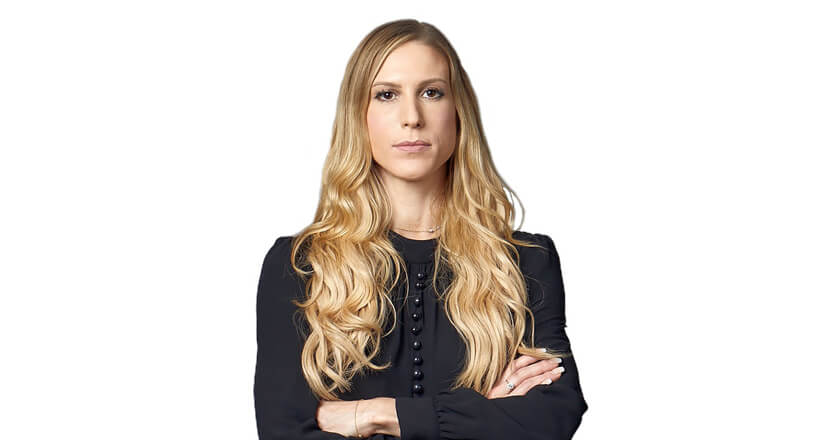
This opinion piece is authored by Magdalena König, General Counsel, Sirius International Holding.
Source: Tahawul Tech