


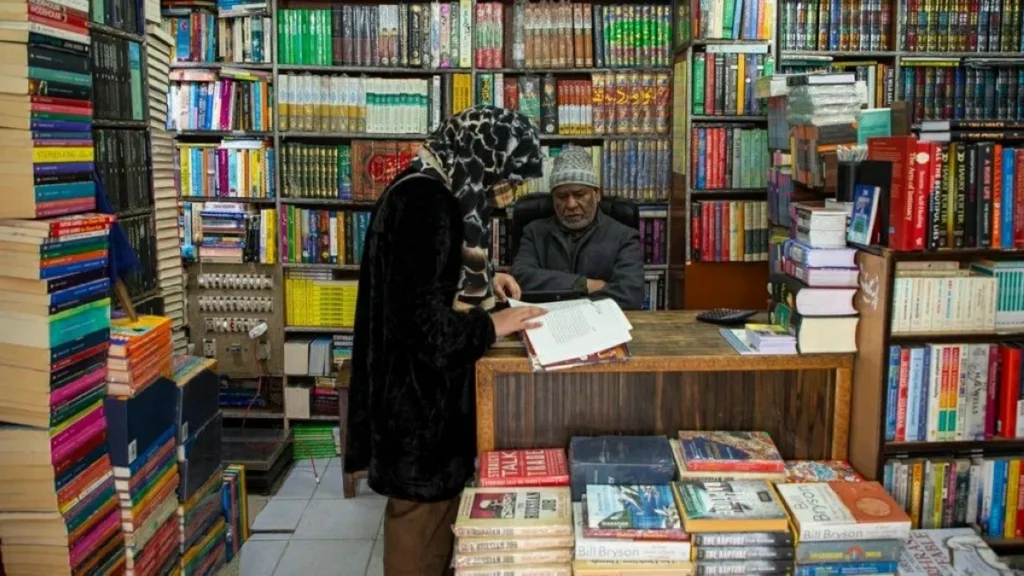
SRINAGAR — A political storm is brewing in Indian-administered Kashmir after authorities ordered a sweeping crackdown on controversial books that allegedly glorified separatist leaders.
All educational institutions in the state have been to review books for “inappropriate and objectionable” content, in a move that has sparked a debate over who gets to shape the region’s history in classrooms.
The order, issued last week, directs schools, colleges, universities and coaching centres to screen all published material on their premises,including research papers and academic theses, for content that could violate “religious sentiments, laws, educational values and established norms”. They must also report books deemed objectionable to the authorities.
Lieutenant Governor Manoj Sinha suspended eight education officials and blacklisted several authors and publishers, while ordering a high-level inquiry.
The action comes after the controversial books, approved for government school libraries under the Samagra Shiksha program, triggered outrage across political parties and civil society.
The publications allegedly described terrorists and separatist leaders as “great personalities”, referred to Jammu and Kashmir as “Indian Held Kashmir” and “Indian Occupied Kashmir”, and praised the outlawed Lashkar-e-Taiba chief Hafiz Saeed, according to India’s ruling Bharatiya Janata Party (BJP).
Authorities insist the directive is not about restricting reading but removing material they say is factually inaccurate or unlawful, including content that “promotes, glorifies, legitimizes or justifies terrorism, violent extremism, secessionism, radicalisation” or any activity prejudicial to the security of the nation.
But opposition parties, academics and students say the move is an attack on academic freedom and an attempt to erase Kashmir’s turbulent history.
Kashmir, which neighbors India and Pakistan claim in full but only control in parts, has witnessed decades of conflict. From the late 1980s, the Indian-administered side also saw a separatist insurgency against Delhi’s rule, which India alleges was supported by Pakistan — a charge Islamabad denies.
Since Delhi revoked the region’s semi-autonomous status in 2019 and brought it under direct federal rule, critics say civil liberties have narrowed and state control has expanded, despite the restoration of an elected local government.
The order follows recent protests by the Hindu nationalist BJP, which is in opposition in Jammu and Kashmir, over two government school library books it said glorified separatist leaders and promoted anti-national sentiments.
The books, profiles of “great personalities” from Jammu and Kashmir that had been in school libraries since 2023, were withdrawn after the uproar. Police later arrested three people linked to their publication.
Last week’s order, issued after the row over the two books, does not define “objectionable material”, saying only that it includes content that could violate religious sentiments or laws, harm national interest or educational values, and that books must follow India’s “age-appropriate” education guidelines.
School education director Naseer Ahmad Wani told the BBC that a committee would review books across schools and libraries, but did not define what would qualify as “objectionable” material.
Last year, authorities banned 25 books, including works by Booker Prize-winning author Arundhati Roy and scholar A.G. Noorani, saying they promoted “false narratives and secessionism”. The ban is being challenged in court.
Noor Mohammad Baba, a political scientist, said restrictions like the latest order go against the right to freedom of speech and expression guaranteed by India’s constitution.
A Kashmir studies teacher, who asked not to be named, said that in a region where history, education and identity are deeply contested, screening books raises “legitimate questions about academic freedom and the state’s role in defining acceptable narratives”.
Some political leaders allege that the order speaks to a broader pattern of surveillance and a crackdown on dissent by the government.
Last February, police raided bookstores in Srinagar and seized hundreds of books, alleging they promoted the ideology of a banned Islamic organization. Critics said many simply explored conflict and political repression in the region.
Altaf Bukhari, leader of the regional Jammu and Kashmir Apni Party, argues that the government can’t remove every history book under the garb of banning “anti-national” content.
“This looks like a wider conspiracy to deprive us our academic content,” he alleged.
Government officials and representatives of the BJP have denied these allegations.
Imran Nabi Dar, spokesperson for the governing National Conference, said the aim was not to restrict reading but to keep controversial material out of classrooms.
“Our point is that there shouldn’t be any unnecessary controversies arising from what is being taught in educational institutions,” Dar said.
Source: Saudi Gazette