


Artificial intelligence is redefining enterprise operations, creating new opportunities for innovation while introducing increasingly complex cybersecurity challenges. The official launch of TrendAI in the UAE marks a significant milestone in helping organisations navigate this new era by combining AI-driven security, governance and threat intelligence into a unified platform. Rapid adoption of generative and agentic AI across the Gulf is expanding the enterprise attack surface, making visibility, accountability and risk management more critical than ever.
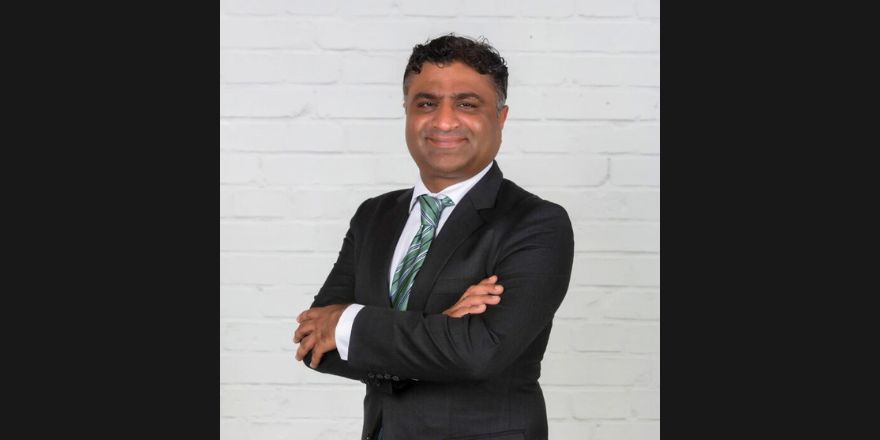
In this interview, Bilal Baig, Vice President, Solutions Engineering, TrendAI, shares his perspectives on the governance gaps organisations must address, the evolving cyber risks posed by autonomous AI, the lessons from TrendAI’s collaboration with Anthropic’s Project Glasswing, and the priorities enterprises should focus on to build secure, resilient AI-powered environments.
Interview Excerpts
With AI adoption outpacing security readiness, what is the single biggest governance gap Gulf organisations need to address today?
The biggest governance gap is that organisations are deploying agentic AI much faster than they are governing it. Many still lack visibility into which AI tools, models and agents are in use, what data they access, and who is accountable for their actions. As autonomous AI becomes more prevalent, every AI agent must have clear ownership, defined guardrails, and continuous monitoring to ensure it operates within its intended scope.
“Security cannot be added after AI is deployed; it must be built in from the outset. For Gulf governments and enterprises, the priority is establishing strong governance, visibility, identity controls and security by design from day one.”
How is Agentic AI changing the cybersecurity threat landscape compared to traditional generative AI tools?
Generative AI lowered the technical barrier for cyberattacks, enabling attackers to create increasingly sophisticated threats with greater ease. Agentic AI raises the stakes further by moving beyond content generation to autonomous action, allowing AI agents to access systems, trigger workflows, make decisions and interact with other agents. Without strong governance and monitoring, these agents can become a new enterprise attack surface. To keep pace, security teams must operate at AI speed, using real-time telemetry, threat intelligence, contextual insights and automated response to detect, prioritise and contain threats before they escalate.
What lessons from the collaboration with Anthropic’s Project Glasswing can enterprises apply to strengthen vulnerability management and remediation?
The key lesson is that faster vulnerability discovery delivers value only when organisations can prioritise and remediate risks just as quickly. Through Project Glasswing, TrendAI is using Anthropic’s Claude Mythos Preview to enhance code review and vulnerability analysis, enabling faster identification, coordinated disclosure and more effective remediation. Rather than attempting to patch every vulnerability, organisations should focus on those that pose the greatest business risk.
“AI helps security teams shift from simply discovering vulnerabilities to prioritising remediation, reducing exposure and strengthening overall cyber resilience.”
Looking ahead to 2027, what AI-driven cyber threats concern do you see most organisations across the UAE and wider Gulf region will experience?
The biggest concern is the speed and scale of AI-enabled attacks, with cybercriminals using AI to automate reconnaissance, launch sophisticated social engineering campaigns and develop advanced threats with minimal technical expertise. Agentic AI is also emerging as a new enterprise attack surface, as autonomous agents gain access to critical systems, data and workflows. At the same time, the rise of shadow AI is reducing visibility into unsanctioned tools and increasing governance risks. For organisations across the UAE and the wider Gulf, the priority is not to slow AI adoption, but to ensure it is supported by strong governance, visibility and security controls from the outset.
Source: Tahawul Tech