


A student-designed emergency app inspired by deadly floods in the Philippines. Solar-powered schools bringing electricity to remote indigenous communities in Guatemala. A bubble-based system that has already stopped more than one million pieces of plastic from reaching Amsterdam’s waterways.
None of these projects won the Zayed Sustainability Prize this year. Yet all of them are receiving funding.
For years, the Zayed Sustainability Prize has celebrated the world’s most promising sustainability innovators. This year, it is changing the rules. In a significant expansion of its impact model, the UAE-based prize is funding 22 finalists that did not take home the top award, signalling a move from recognising innovation to actively accelerating it.
Stay up to date with the latest news. Follow KT on WhatsApp Channels.
Under the initiative, organisational finalists receive $100,000, while Global High Schools finalists receive $25,000, allowing projects with proven potential to continue growing despite missing out on first place.
How did Salbavida come to be?
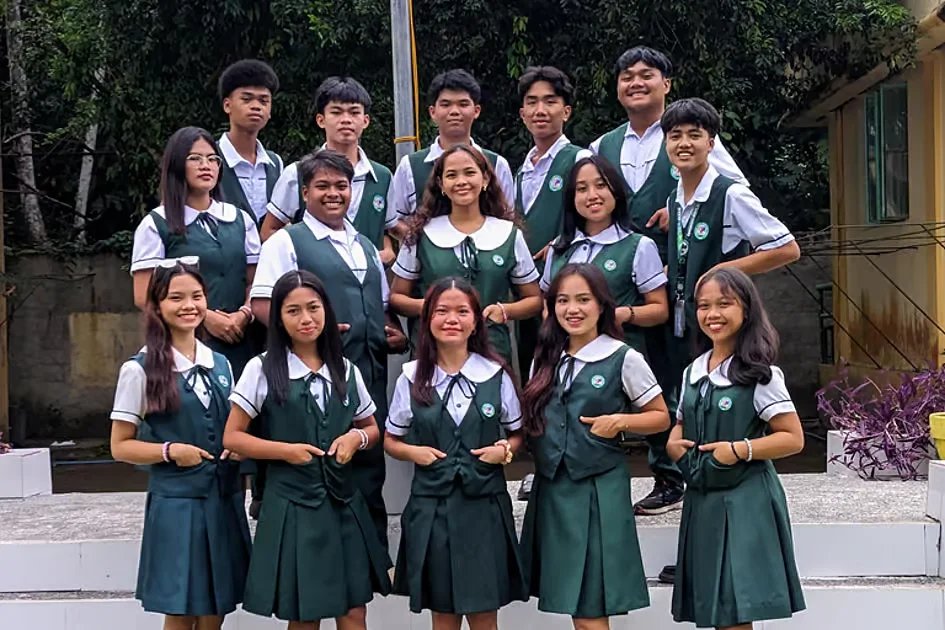
For the students behind Salbavida, the inspiration came from watching neighbours plead for help online as floodwaters rose around them.
“Every time floodwaters rise, we witness a painful reality in our community,” said Yasmine Abarca, project leader of Team SALBAVIDA from Camarines Norte Senior High School in the Philippines.
“People trapped in their homes would turn to Facebook and other social media platforms to beg for rescue – and many of those cries for help went unanswered, not because nobody cared, but because the system was broken.”
The team’s “breaking point” came during Tropical Storm Kristine in October 2024, when record rainfall inundated the Bicol region, destroying homes and crops.
“Watching communities suffer while communication channels failed made us ask — what if there was a better way?” Abarca said. “That question became SALBAVIDA, which means ‘lifesaver’ in Filipino.”
The mobile and web-based platform allows civilians to send a one-tap distress signal containing their GPS location, contact details and information about their situation directly to emergency responders.
“Rescuers no longer have to piece together fragmented social media posts or guess locations,” Abarca said. “They receive organised, accurate, actionable information.”
The team said the funding would help transform the project from an idea into a functioning emergency response system.
“This is no longer just a student project,” Abarca said. “It has the potential to become a functioning tool that actual rescuers and actual families in flood-prone communities can rely on.”
The funds will support pilot deployment in Daet, user training for residents and first responders, infrastructure upgrades and further refinement of the platform.
Poder y Luz Maya’s Solar Centre
Thousands of kilometres away in Guatemala’s Western Highlands, another finalist is working to solve a different problem — schools without electricity.
Since 2014, Poder y Luz Maya’s Solar Centre’s initiative has brought renewable energy to rural and indigenous communities, electrifying 18 schools and directly benefiting more than 3,300 children and young people.
Its model goes beyond installing solar panels. Communities form their own solar committees, with women and young people involved in planning, maintenance and long-term management.
“This transforms a technical installation into a self-sustaining community empowerment process,” said Monika Goforth, co-founder and board member of Poder y Luz Maya.
Among the programme’s most powerful examples is El Rosario Monte María in El Quiché. After receiving its Solar Center during the Covid-19 pandemic in 2020, the community launched a solar-powered digital education programme that helped increase student enrolment from 75 to 140.
The community later expanded the system independently.
“They built their own fundraising plan and expanded the system from 960 watts to 3 kilowatts independently,” Goforth said. “That is true community ownership.”
How will Poder y Luz Maya’s Solar Centre use their funding?
The funding from the Zayed Sustainability Prize will go towards establishing another Solar Center in El Quiché, benefiting more than 100 students directly and up to 400 people in the surrounding community.
“This support represents an important international validation of our work and of the capacity of rural and indigenous communities to lead sustainable solutions against climate change and energy inequality,” Goforth said.
The Great Bubble Barrier
Meanwhile, in the Netherlands, an idea born over birthday drinks is helping prevent plastic from reaching the ocean.
“The idea behind The Great Bubble Barrier was born out of a love for the ocean,” said Francis Zoet, co-founder and chief operations officer of The Great Bubble Barrier.
He recalled teaching sailing classes with friends and repeatedly encountering floating plastic pollution.
“Over drinks after a birthday, we began imagining a solution that could stop plastic in rivers without obstructing ship traffic or fish migration,” he said. “Funnily enough, we got inspired by the bubbles in our glasses.”
Nearly a decade later, the organisation has four Bubble Barrier systems in operation, four more underway, and one major milestone to celebrate.
“Our first Bubble Barrier in Amsterdam has caught over one million pieces of plastic,” Zoet said.
Installed in Amsterdam’s Westerdok canal in 2019, the system intercepts an average of 80 kilograms of waste each month – roughly 15,500 individual pieces – before they reach the North Sea.
But Zoet said the technology has also become a valuable monitoring tool.
“Amsterdam now has real evidence about what’s entering its waterways and where it’s coming from,” he said. “The city has become a real example of what proactive, collaborative action can look like.”
The new funding will support an education and plastic monitoring centre in Amsterdam and accelerate expansion efforts in Southeast Asia.
For the Zayed Sustainability Prize’s judging committees, these kinds of projects demonstrate why extending support beyond winners matters.
“This shift deepens our commitment to scaling sustainable impact,” said Dr Githinji Gitahi, Selection Committee Member for Health.
“Transformative innovation requires not only breakthrough ideas but also resources to ensure solutions are sustainable, operable within existing systems, and genuinely adopted by communities.”
Simi Kamal, Selection Committee member for Water, said expanding support strengthens rather than changes the Prize’s purpose.
“Supporting non-winning applicants would not change the purpose of the Zayed Sustainability Prize,” she said. “Rather, it would strengthen it.”
She noted that follow-on funding can be particularly important in developing markets where access to finance remains limited.
“For emerging SMEs and nonprofits, early funding can determine whether a promising solution is able to continue, grow, and reach the communities it was designed to serve,” Kamal said.
Rebecca Vukovic, a member of the Global High Schools Selection Committee, said the move also sends a message to future applicants.
“The impact you can make on global sustainability challenges matters more than winning first prize,” she said.
“Being a finalist for the Zayed Sustainability Prize is recognition of your project’s credibility, potential and measurable impact – and now you have the funding to bring that project to life.”
Applications for the 2027 Zayed Sustainability Prize cycle remain open until June 22.
For the 22 finalists receiving support this year, however, the biggest prize may be the opportunity to keep going.
For families stranded by floods, students studying by solar power and communities trying to stop plastic pollution before it reaches the sea, coming second could prove to be the difference between a promising idea and real-world change.
Source: Khaleej Times