


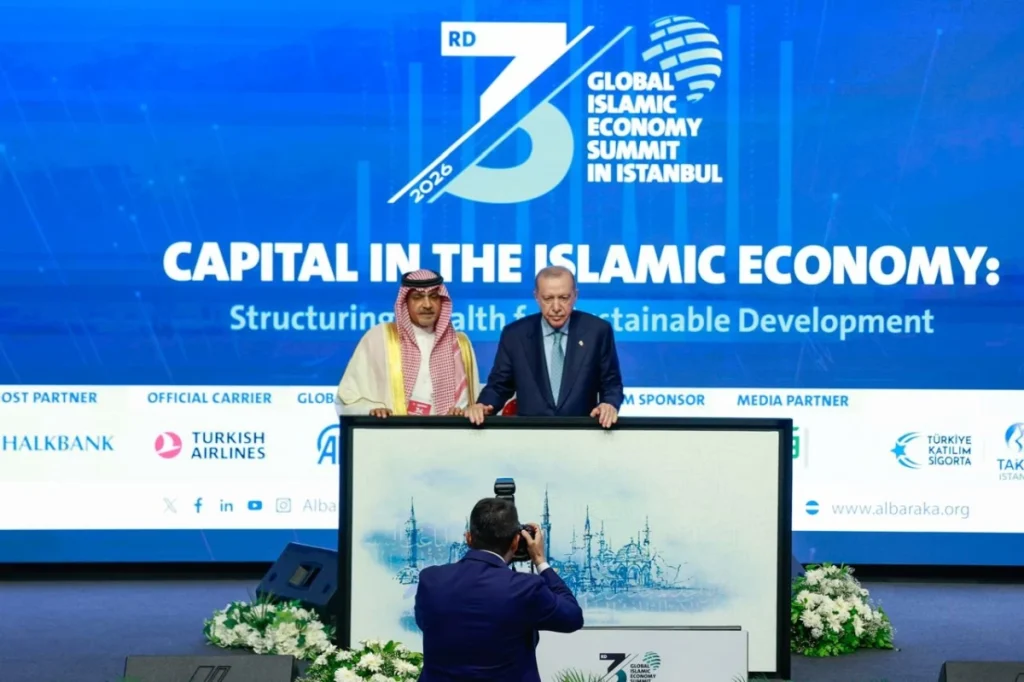
ISTANBUL — Abdullah Saleh Kamel, Chairman of the Federation of Saudi Chambers and President of the Islamic Chamber of Commerce and Development, called for greater adoption of Saudi Arabia’s experience in empowering waqf (endowment) institutions. He described them as one of the most effective tools for building sustainable wealth and supporting long-term development.
Speaking at the opening of the 3rd Global Islamic Economy Summit in Istanbul, organized by the AlBaraka Forum for Islamic Economy under the theme “Capital in the Islamic Economy: Structuring Wealth for Sustainable Development,” Kamel said countries that have strengthened waqf through legislation and regulatory frameworks, particularly Saudi Arabia, Türkiye and Malaysia, offer models worthy of emulation.
Kamel, who also serves as Chairman of the Board of Trustees of the AlBaraka Forum, described Islamic civilization as a “civilization of waqf,” highlighting the historic role of endowments in supporting education, healthcare, social welfare and economic development across the Muslim world.
He urged participants to explore the potential of Islamic endowments to mobilize capital and direct it toward investments with lasting social and developmental impact.
Addressing broader global economic challenges, Kamel said the Islamic economic model offers hope in tackling structural imbalances in the international financial system.
He argued that modern economic systems increasingly treat capital as a tool focused solely on private gain, often overlooking social, environmental and humanitarian consequences.
He also warned of growing wealth concentration among a small segment of the global population and the expanding influence of multinational corporations, particularly major technology companies, which he said present increasing challenges for governments and societies worldwide.
Kamel outlined three core principles governing capital in the Islamic economy: capital should generate and distribute wealth, money should not become a commodity traded for its own sake, and wealth should be directed toward development through mechanisms such as zakat, charitable giving and waqf rather than being hoarded.
He described this framework as a form of “pure social capital” that promotes economic justice and sustainable development.
Kamel also criticized some corporate social responsibility practices, saying charitable contributions often fail to match the scale of the social and environmental impacts generated by certain business activities.
He further warned of the growing burden of sovereign debt, noting that many governments now devote significant resources to servicing debt obligations, exposing deeper vulnerabilities within the global financial system.
Concluding his remarks, Kamel stressed that the role of capital in the Islamic economy extends beyond serving Muslims to benefiting humanity as a whole, expressing hope that the summit would help advance a model of capital that combines financial sustainability with social and developmental impact.
Source: Saudi Gazette