


MINA — On the third day of Hajj on Wednesday, pilgrims started performing five main rituals of Hajj—the obligatory rituals of stoning at Jamrat, shaving or trimming hair, and sacrificing of animal, and two remaining pillars of Hajj—Tawaf Al-Ifadah and Sai.
The pilgrims, who stayed overnight in Muzdalifah, flocked to Mina on Wednesday morning to perform the stoning ritual. With hearts filled with joy and pleasure over performing the ritual of standing at Arafat, the high point of the annual pilgrimage of Hajj, on Tuesday, masses of pilgrims embarked on a symbolic stoning of the devil under the soaring summer heat. The ritual marks the final days of the Hajj and the start of the Eid Al-Adha celebrations for Muslims around the world on Wednesday, Dhul Hijjah 10, which is also known as Yaum Al-Nahr or the Day of Sacrifice.
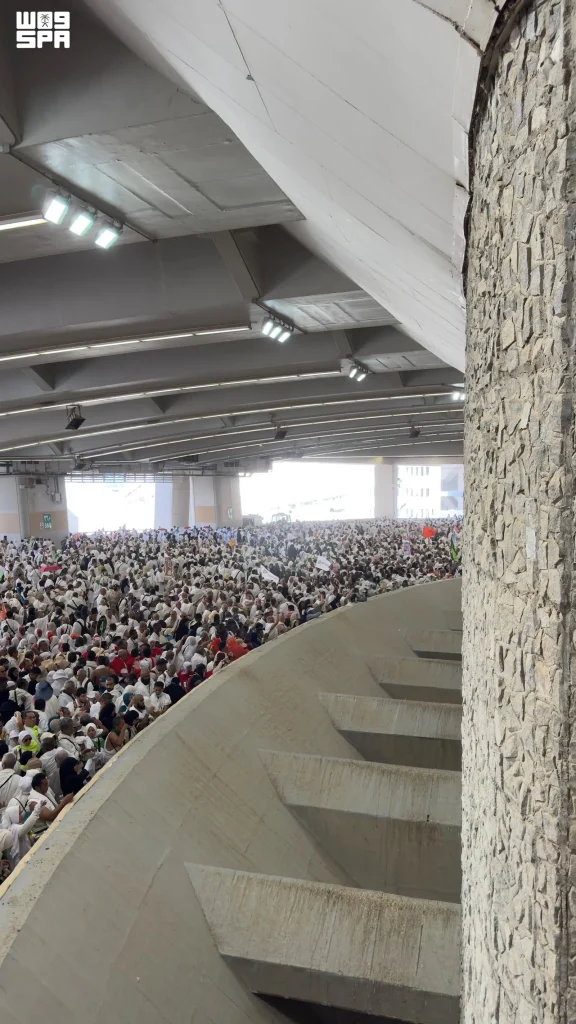
Upon reaching Mina, pilgrims performed stoning at Jamarat Al-Aqba (biggest pillar symbolizing Satan), following the Sunnah of the Prophet (peace be upon him). They used seven pebbles for the stoning ritual. The pilgrims’ movement to hurl pebbles at Jamrat Al-Aqaba was smooth, orderly, and flexible on the floors of the giant Jamarat Bridge Complex with all the precautionary measures in place. Reaching the Jamarat, they stopped the chanting of talbiyah and started reciting takbeer (Allahu Akbar) while proceeding to perform the stoning ritual.
The Jamarat facility witnessed smooth crowd movement supported by direct field monitoring and operational plans designed to regulate pedestrian flows and ensure safe mobility between the holy sites. The movement has been well-organized in accordance with the approved crowd management plan.
Pilgrims were seen performing the ritual in an orderly manner, without congestion or crowding, across the different levels of Jamarat Bridge. Comprehensive services were in place, including security, healthcare, ambulance, municipal, and civil defense services, while security personnel managed the flow.
Saudi authorities have mobilized ambulance and medical teams, guidance and awareness services, and enhanced sanitation and cleaning operations to provide a safe and comfortable environment for the pilgrims. Security forces and scouts guided pilgrims and directed them to use the designated routes and levels of the bridge for the stoning ritual, ensuring smooth and efficient movement.
After performing the stoning ritual, the pilgrims sacrificed animals, and then had a partial exit (first tahallul) from the state of ihram by shaving or cutting hair for men while women trim the length of a finger-tip from one strand of hair. Male pilgrims then changed back into normal clothing from ihram. Pilgrims then proceeded to Makkah to perform Tawaf Al-Ifadah and Sai’ (ritual of running between Safa and Marwah). Those pilgrims who performed Sai’ along with Tawaful Qudum (Tawaf of Arrival) need not perform it again.
With the performance of Tawaf and Sai’, pilgrims would exit completely from the state of ihram. In the remaining two or three days of Hajj beginning from Thursday that are known as Ayyamu Tashreeq or Tashreeq Days, the only ritual to be performed is stoning at each of the three Jamarat (Jamarat Al-Sughra, Jamarat Al-Wusta and Jamarat Al-Aqba) seven times each after staying overnight in Mina.
More than 1.7 million pilgrims performed Hajj this year. These include 1,546,655 foreign pilgrims and 160,646 domestic pilgrims.
Source: Saudi Gazette