


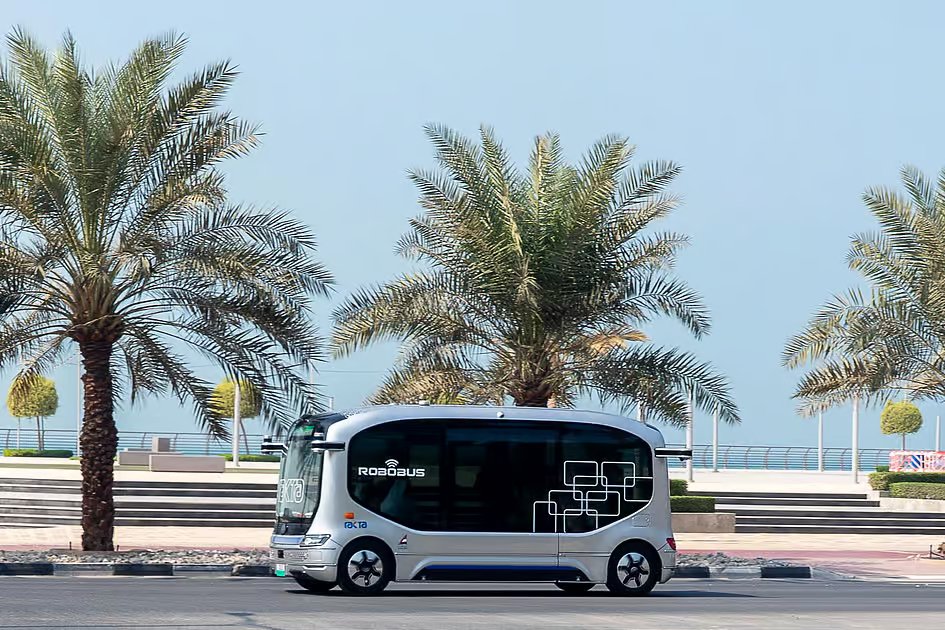
Ras Al Khaimah is taking a major leap toward autonomous mobility, with early trials of robotaxis and robobuses showing strong performance, safety, and public interest as the emirate builds a future-ready transport system.
The pilot programme for self-driving vehicles has logged more than 650 operational hours and covered over 16,000km across real-world traffic settings, operating both day and night. These trials tested advanced sensing, navigation, and decision-making systems under diverse driving scenarios, helping evaluate how autonomous vehicles respond in live traffic.
According to officials overseeing the project, the vehicles have demonstrated high levels of safety, reliability, and transport efficiency. The system is built on internationally recognised safety standards, including ISO 26262 and ISO 21448, with continuous monitoring protocols. Daily performance reviews, incident tracking, and technical evaluations are part of the framework, alongside in-vehicle safety supervision to protect passengers during trials.
Stay up to date with the latest news. Follow KT on WhatsApp Channels
Although still in testing, feedback from early users and observers has been largely positive. Trials are limited to safety teams and authorised staff, but early impressions from controlled environments show smooth rides, stable performance, and growing confidence in autonomous mobility. Visitors in trial areas have also shown strong curiosity and enthusiasm for future public use, especially in tourist zones.
A key factor in the trial’s success is the careful selection of operating zones and routes. The initial testing area, Al Marjan Island, was chosen for its well-planned infrastructure, smooth traffic flow, and role as a tourism hub.
Routes include multiple stops at hotels, public spaces, and key destinations, allowing the system to simulate daily mobility patterns in a controlled environment. The design follows international frameworks, including ISO 34502, to ensure safe, structured deployment.
The emirate has also strengthened its regulatory foundation with the introduction of a new law in 2026 governing autonomous vehicles. The legislation establishes clear rules for testing, operations, and future expansion, while assigning regulatory oversight to the Ras Al Khaimah Transport Authority.
It also sets strict requirements for safety, cybersecurity, and data protection, reinforcing a structured, secure environment for autonomous mobility development.
Officials say the region’s infrastructure is well-prepared to support expansion, with integrated monitoring systems, real-time data collection, and flexible route planning. This readiness should support gradual scaling of services beyond pilot zones.
Looking ahead, Ras Al Khaimah plans to expand its autonomous transport network by introducing additional vehicles, extending routes, and eventually connecting more key destinations across the emirate. Public participation is also expected to increase gradually as safety milestones are achieved and systems move closer to full operational deployment.
The long-term vision goes beyond convenience. Authorities expect autonomous mobility to reduce traffic congestion, lower carbon emissions, and improve transport efficiency. Robotaxi services are also being evaluated for future deployment under the same safety-driven framework, positioning Ras Al Khaimah as an emerging hub for smart, sustainable transport innovation.
Source: Khaleej Times