


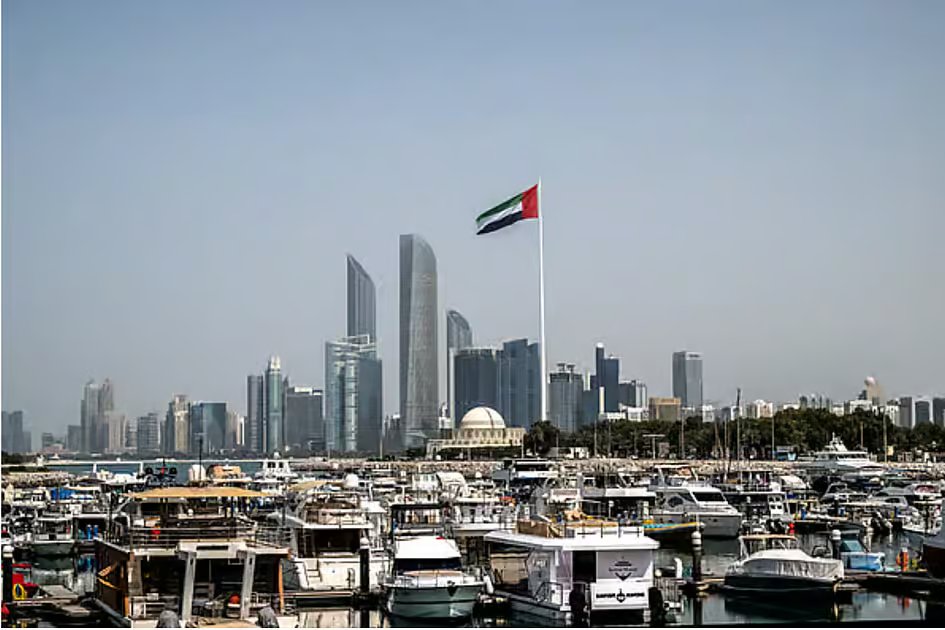
The credit rating agency Fitch Ratings has ranked Abu Dhabi among the lowest government debt and highest sovereign net foreign assets.
At the end of 2025, government debt was well below the peer median of 50.3 per cent, at 19.5 per cent of GDP. Fitch said it expects this to rise to 25.3 per cent in 2026 due to higher war-related borrowing, before stabilising post-war.
The agency affirmed Abu Dhabi’s rating with a stable outlook, citing the emirate’s high GDP per capita and strong fiscal and external metrics. This includes its Long-Term Foreign-Currency Issuer Default Rating (IDR), which it gave an ‘AA’ rating.
Stay up to date with the latest news. Follow KT on WhatsApp Channels
Fitch Ratings’ IDR reports are assigned to corporations, sovereign entities, financial institutions such as banks, leasing companies, and insurers, and public finance entities. AA is considered a ‘very high credit quality’ and denotes expectations of very low default risk.
To further support the domestic debt market, Abu Dhabi plans to issue in local currency amid high bank liquidity and is likely to refinance upcoming external debt maturities locally.
Vulnerable oil export infrastructure
The credit agency said that the rating is constrained by high dependence on hydrocarbons, a relatively weak but improving economic policy framework, geopolitical risks and low governance indicators compared with peers.
It added that Abu Dhabi’s export revenues are likely to remain close to pre-war forecasts despite the disruption, as higher prices and exports via Fujairah offset lower volumes through the Strait of Hormuz.
Because Abu Dhabi’s main export is crude oil, Fitch Ratings considers the capital’s oil export infrastructure less vulnerable to long-term damage than more concentrated and bespoke downstream oil or liquefied natural gas (LNG) plants.
Lower government surplus
Fitch Ratings said it projects the general government surplus, including its estimate of Abu Dhabi Investment Authority’s (ADIA) investment income, to narrow to 3.0 per cent of GDP in 2026 from 6.5 per cent in 2025.
Excluding ADIA’s estimated investment income, it estimates a deficit of 2.2 per cent, the first since 2020. Revenue will benefit from the first distribution of corporate income tax proceeds, which were collected on the 2023-2024 corporate performance.
It also estimates that Abu Dhabi’s sovereign net foreign assets, which mostly comprise ADIA assets, are at 291 per cent of GDP at end-2025 (‘AA’ median: 45.4 per cent). The largest shares of the 2025 surplus were allocated to Abu Dhabi Developmental Holding Company PJSC and Mubadala, both GREs with long-term development mandates, with some also channelled to MGX, a venture focused on AI investments owned by Mubadala and G42, which is partly government-owned.
Abu Dhabi banks resilient
Abu Dhabi’s banks have significant buffers against shocks. First Abu Dhabi Bank and Abu Dhabi Commercial Bank both have liquid assets/deposits ratios of over 30 per cent, Fitch Ratings said. UAE banks’ Viability Ratings could face risks from asset-quality deterioration under an adverse scenario in which the Iran war has severe effects, with real estate lending the most likely source of stress. Lower business volumes and higher impairments under such a scenario would reduce profitability and weaken capital buffers. Abu Dhabi’s flagship banks have limited exposure to corporate real estate and would retain ample liquidity buffers in a stress scenario.
Source: Khaleej Times