


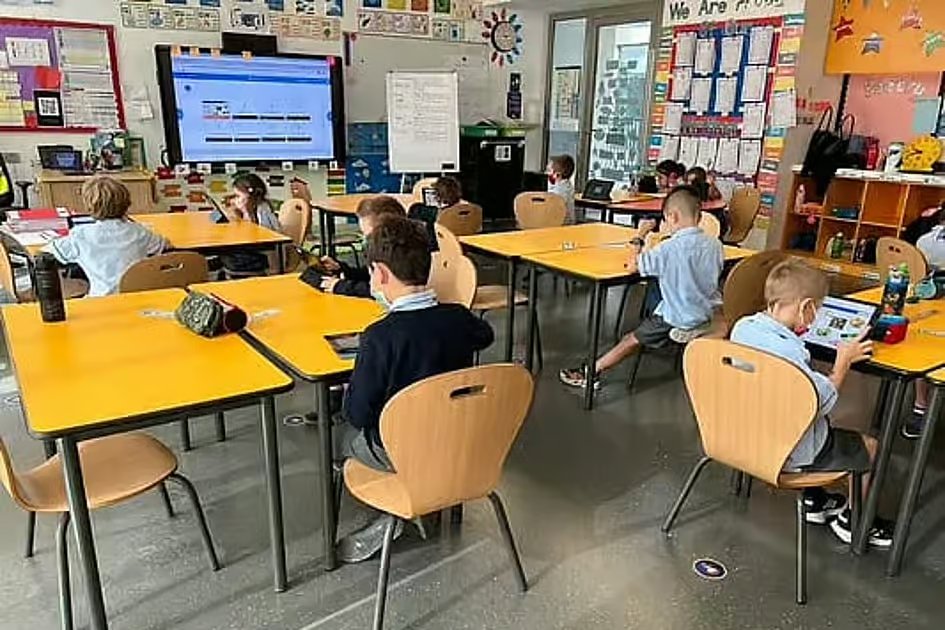
Across the UAE, a quiet but significant shift is taking place in schools: live online classes are being phased out as campuses fill up again.
After weeks of distance learning, followed by hybrid arrangements and contingency measures introduced during the regional conflict, educators highlight that the return to in-person learning is no longer gradual — it’s nearly complete.
Parents have even begun receiving circulars from schools informing them that synchronous (live online) lessons will no longer be offered, as the majority of students have resumed attending classes physically.
Stay up to date with the latest news. Follow KT on WhatsApp Channels.
The move reflects a broader confidence in stability across the region, alongside a renewed focus on the academic and social benefits of classroom learning.
A decisive shift back to classrooms
School leaders say the transition has been driven largely by families themselves. Seema Umar, principal, Dewvale School, Dubai, pointed to a growing preference among parents and students for traditional, face-to-face education.
“The recent increase in in-person attendance has been influenced by families’ preference for face-to-face learning, the improved stability within the region, and the recognised academic, social, and emotional benefits of students learning on campus,” she said, explaining how schools have reassessed the need for parallel online systems.
“As attendance has normalised, the school has reviewed the need for running parallel live online classes. While regular live online classes are being phased out, Distance Learning (DL) support may still continue in approved and exceptional cases.”
She added that flexibility remains for families facing genuine constraints, noting: “For students who may require temporary remote learning due to travel, health, or other genuine constraints, the school continues to review requests on a case-by-case basis. Support may include access to online platforms, learning resources, assignments, recorded materials where available, and regular communication with teachers to ensure continuity of learning.”
Emphasising the long-term direction, she said, “While hybrid or online learning remains a useful option in exceptional circumstances or emergency situations, the school’s primary focus has now firmly returned to full in-person education. We believe that classroom-based learning provides the strongest outcomes for academic achievement, student wellbeing, collaboration, and overall development.”
Attendance rises, hybrid model fades
Data from schools across the emirates underscores this shift, with attendance steadily rising to levels comparable to those seen before the conflict began.
Pramod Mahajan, principal of Sharjah Indian School, said the transition has been both swift and decisive, with regulators also adapting their requirements.
“Learning has now fully returned to in-person, with 100 per cent face-to-face classes. The SPEA has issued clear guidelines on safety protocols and school readiness,” he said, noting that earlier requirements for parallel distance learning are no longer as relevant as on-site attendance continues to rise.
“We conducted a survey with our parents, and found overwhelming preference for face-to-face learning. On the first day itself, attendance stood at 92 per cent, and it has since steadily risen to nearly 96 per cent. An absentee rate of 4 to 6 per cent is considered normal, even before the disruptions, as reflected in our records from the past five years.”
He added that attendance continues to be closely tracked, “Schools are required to report daily attendance to the SPEA, which monitors whether any students are outside the country and the reasons for their absence. In some cases, families affected by job losses have applied for transfer certificates.”
Limited remote support still in place
While live online classes are being discontinued, schools stress that support systems built during the hybrid era have not disappeared entirely.
Matthew Harper, Deputy Head of Primary at The British International School Abu Dhabi, said a small number of students continue to benefit from structured remote access when needed.
“While most students are learning on campus, we continue to support a small number who temporarily require remote learning due to travel or medical circumstances,” he said, outlining how digital tools are now used more selectively.
“In these cases, learning is supported through our online platforms including SeeSaw and Firefly, where students access structured work aligned to classroom learning and receive regular feedback from teachers until they are able to return to school.”
Harper added that wellbeing remains a key focus even for those learning remotely, “In addition, students receive weekly one-to-one online check-ins with their teacher to support both their academic progress and wellbeing. Students can also continue to access YouHQ to support their wellbeing during this period.”
Source: Khaleej Times