


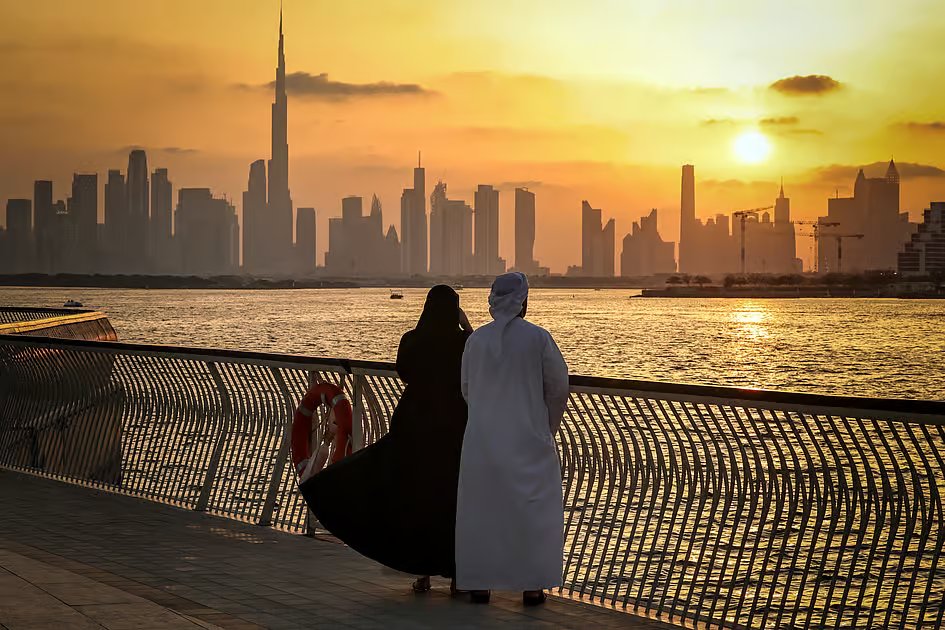
Even under sustained missile and drone attacks from Iran, the UAE’s strategy was not only to defend its skies but to preserve normal life, a senior diplomat has said. The country sustained its role as a “regional hub” for trade, finance and logistics despite heightened geopolitical risk, while using that stability to reinforce its diplomatic posture.
“This is particularly notable given the strategic importance of the Strait of Hormuz, through which roughly one-fifth of global oil supply passes. The ability to maintain operational continuity in such conditions reflects both infrastructure resilience and policy foresight,” Dr Mohammed Ibrahim Al Dhaheri, Deputy Director-General of the Anwar Gargash Diplomatic Academy (AGDA), told Khaleej Times in an interview.
Today, April 28, marks two months since Iran launched its attacks on the UAE and other Gulf countries. No attacks have been reported since a truce was announced between the US and Iran on April 9.
Stay up to date with the latest news. Follow KT on WhatsApp Channels
According to cumulative figures cited in the interview, the UAE’s air defence systems intercepted over 500 ballistic missiles and more than 2,000 unmanned aerial vehicles launched towards the country since February 28, using a multi-layered system that includes advanced platforms such as THAAD and Patriot.
Strength without escalation
Despite coming under direct attack, the UAE has repeatedly emphasised de-escalation and dialogue.
“Restraint is not passive,” Al Dhaheri said. “It reflects a deliberate strategic choice, grounded in the confidence that the UAE can defend its sovereignty decisively.”
When asked how unusual this approach was, the diplomat said: “It is relatively uncommon, particularly in a region where escalation cycles have often followed a pattern of rapid retaliation. Calls for de-escalation are often interpreted as a function of constraint. In this case, they are underpinned by demonstrated capability. The UAE has successfully intercepted a large volume of aerial threats while maintaining internal stability and protecting critical infrastructure.”
The UAE, he added, understands that escalation can be difficult to control once it begins. “Even limited exchanges can expand unpredictably, drawing in additional actors and increasing the cost of resolution. By prioritising de-escalation, the UAE is effectively investing in containment.”
Stability is not only a security objective but also an economic and social one. “For societies across the region, prolonged tension translates into uncertainty that affects livelihoods, mobility and opportunity. This combination of firmness and restraint reflects a high degree of strategic discipline,” said Al Dhaheri.
He stressed that this balance between strength and restraint has been deliberate. “Operational strength has been demonstrated through effective interception of sustained missile and drone attacks, alongside the protection of critical infrastructure and the maintenance of national continuity. These actions reinforce deterrence, reassure the public, and signal clear capability to any potential adversary.”
What is strategically significant, he added, is not only the volume of interceptions but the outcome. Despite repeated targeting of infrastructure and urban areas, the UAE maintained continuity of governance, economic activity and daily life. Aviation operations continued with limited disruption, ports remained functional, and critical supply chains were preserved.
Diplomacy alongside defence
Even as it came under direct attack, the UAE continued to emphasise diplomacy as a central pillar of its response, maintaining engagement with regional and international partners and reinforcing de-escalation messaging.
Military action, Al Dhaheri noted, can address immediate threats but does not resolve the underlying drivers of instability, pointing to ongoing conflicts where battlefield gains have failed to produce lasting political solutions.
“Diplomacy, in this context, is not pursued at the expense of security. It is exercised alongside it,” he said, adding that maintaining communication channels helps reduce the risk of miscalculation and unintended escalation.
This dual-track approach — defence to manage immediate threats and diplomacy to prevent their recurrence — reflects what he described as a coherent and long-standing foreign policy framework.
The UAE, he said, has been clear that it is not a party to the war, even as it asserts its right to self-defence. It has not sought involvement in the conflict and has worked with partners in the GCC to de-escalate tensions, even as it has come under sustained attacks.
In legal and strategic terms, such attacks trigger the right to self-defence under Article 51 of the UN Charter, which is distinct from participation in an armed conflict. The UAE has maintained that while it does not seek escalation or wider confrontation, it will respond in a calibrated and proportionate manner to protect national security and civilian infrastructure.
“This approach leaves no ambiguity about the UAE’s intent and the seriousness with which it defends its sovereignty,” Al Dhaheri said.
Protecting social cohesion
Beyond the security and diplomatic dimensions, the UAE has also sought to shield its internal social fabric from external tensions.
A key part of that effort has been maintaining a clear distinction between the Iranian regime and the Iranian community in the UAE, a move the diplomat said is critical to preserving trust in a diverse society.
“The UAE is a diverse society with a large expatriate population, and social cohesion is a strategic asset. Ensuring that communities are not stigmatised because of geopolitical developments helps to preserve stability and trust,” Al Dhaheri said, noting that many individuals from the Iranian community have built their lives and livelihoods in the country. “Maintaining a clear distinction ensures that they are not made to bear the consequences of state-level tensions over which they have no control.”
Source: Khaleej Times