


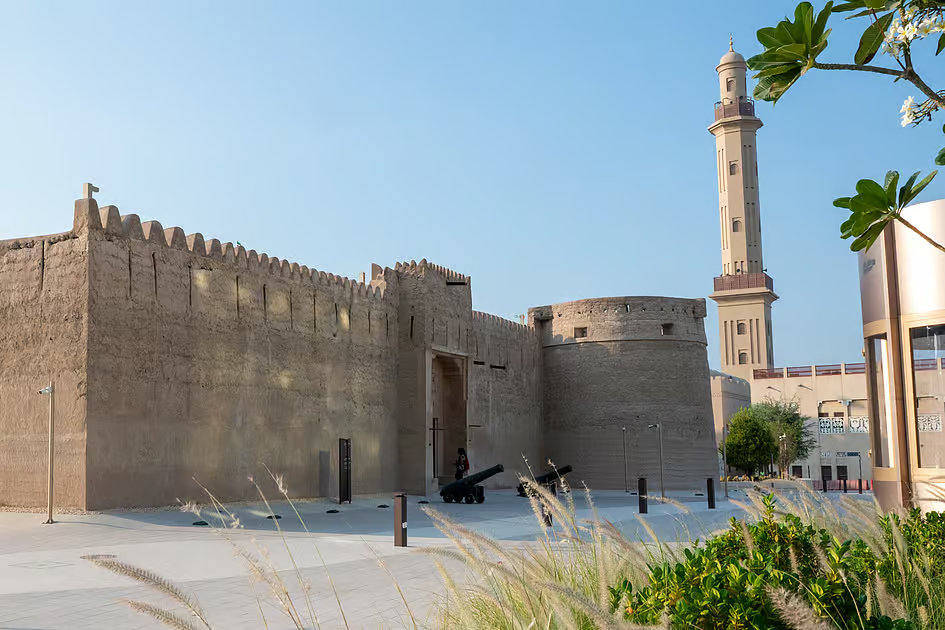
For centuries, its walls stood guard over a city shaped by the sea, trade and ambition. Today, Al Fahidi Fort once again opens its doors to visitors, offering a fresh look at Dubai’s history through rare artifacts, untold stories, and immersive museum experiences.
Built in 1787, the fort has witnessed Dubai’s transformation from a small coastal settlement into a global city. It has served as a defensive stronghold, a residence for the ruling family, a center for government administration, and, in 1971, became Dubai’s first museum.
Now, following an extensive redevelopment, the historic landmark enters a new chapter, bringing together its original architecture and modern exhibition spaces to tell the story of the emirate and the people who shaped it.
Stay up to date with the latest news. Follow KT on WhatsApp Channels.
The new museum houses more than 700 historical and heritage objects across six main galleries, featuring archaeological discoveries, rare weapons, Islamic armour, archival material and oral histories, alongside digital displays and interactive experiences.
Speaking to Khaleej Times during a media tour, Maryam Muzaffar Ahli, Director of Collections and Artistic Evaluation at Al Fahidi Fort, said the museum was designed to tell Dubai’s story through the different roles the fort played throughout history.
“The museum focuses on telling Dubai’s defensive story through its collections, whether Islamic or social, as well as its extensive oral heritage,” she said.
Ahli explained that the fort had served as a residence for the ruling family, a center for managing the city and a defensive stronghold before becoming the emirate’s first museum in 1971. Its reopening comes as the institution marks its 55th anniversary.
Rare weapons and forgotten stories
One of the new museum’s most distinctive features is its weapons collection, offering a glimpse into the region’s history and its connections with the wider world.
The collection includes pre-Islamic weapons, with the oldest dating back more than 8,000 years, as well as Islamic weapons never displayed before and pieces from the 19th and 20th centuries.
The exhibits also explore the weapons used to defend the fort and the wider region, highlighting how Dubai’s history was connected to developments beyond its borders.
The redevelopment itself presented a major challenge: modernising the visitor experience without compromising the historic structure.
Ahli said specialised monitoring equipment was installed around the fort and the surrounding historic area to detect vibrations and identify any potential structural damage during construction. The technology helped ensure the project was completed without harming the original building.
New exhibition spaces were also developed underground, allowing the museum to expand while keeping the fort’s historic architecture at the centre of the experience.
International archaeological consultants contributed to the restoration plans, while the monitoring system used during the project received an international innovation award, she added.
More than a museum visit
Beyond its collections, the fort is preparing a program of activities designed to attract tourists, residents, families and younger generations.
Aisha Khansahib, Director of Al Fahidi Fort and Specialty Museums at Dubai Culture, said visitors can expect guided tours in Arabic and English, led by trained guides, as well as workshops and educational programs.
She expects tourists to make up a significant proportion of visitors, noting that the museum attracted thousands of tourists daily before closing for redevelopment six years ago.
The museum is also looking to strengthen partnerships with schools and universities, offering educational visits and opportunities for students to research its collections.
Architecture students, in particular, will be encouraged to explore the fort’s construction techniques and historical features.
Interactive activities, seasonal programs and winter camps will also form part of the museum’s offering, with technology playing an important role in making history more engaging for younger visitors.
Khansahib also highlighted how the collections demonstrate Dubai’s longstanding connections with neighboring regions and different cultures.
She said the museum aims to highlight values such as tolerance and cultural exchange, showing how Dubai was never isolated from the world around it.
A historic landmark preserved
While the museum has undergone significant changes, its original architectural features remain a central part of the experience.
Its thick walls, defensive towers, internal courtyards and traditional passageways reflect the building techniques used by local communities centuries ago.
One of its most prominent features is the Murabba Tower, with walls about two meters thick and built from coral stone and gypsum, reflecting the traditional craftsmanship and practical knowledge of the time.
The redevelopment has also introduced new exhibition areas and visitor facilities, while underground spaces provide additional room without overshadowing the historic building.
The surrounding area has also been considered part of the wider visitor experience, reconnecting the fort with neighboring historic streets, markets, and landmarks of Old Dubai.
As its doors open today, Al Fahidi Fort offers visitors more than a journey through the city’s past. It provides a reminder of how Dubai has evolved, while preserving the stories and heritage that continue to shape its identity.
Source: Khaleej Times