


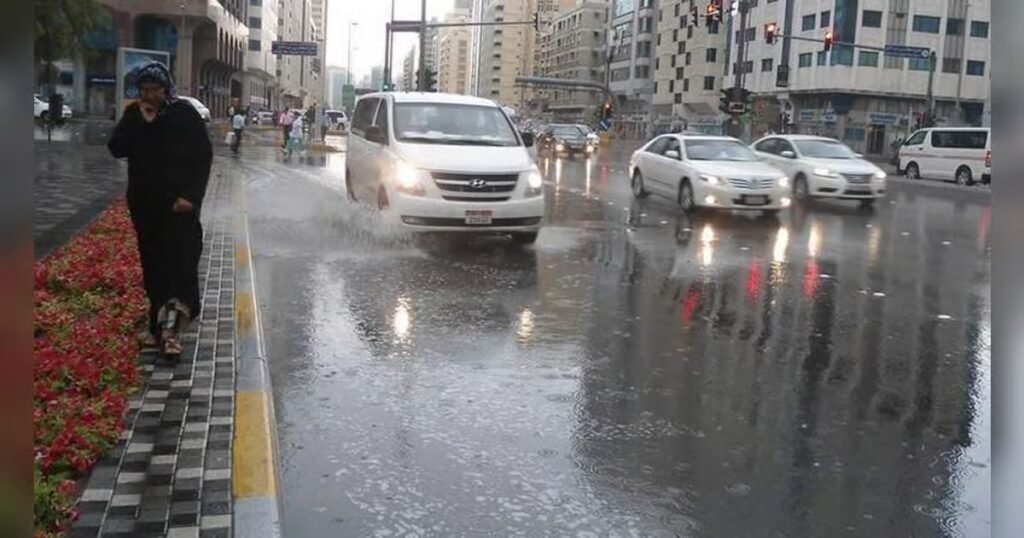
Moisture-laden winds from the Arabian Sea, coupled with an approaching low-pressure system, are expected to trigger thunderstorms and heavy rain across parts of the UAE from Wednesday, with Dubai, Abu Dhabi and the northern emirates among the areas likely to be affected.
The National Centre of Meteorology (NCM) has forecast rainfall of varying intensity, with some areas likely to experience heavy showers as cloud formations develop and move across the country. Winds could reach speeds of 45kmph, raising dust and sand and affecting sea conditions.
The NCM said unsettled conditions would persist from Monday through Thursday, accompanied by a gradual drop in temperatures as cloud cover increases and rainfall becomes more widespread.
Stay up to date with the latest news. Follow KT on WhatsApp Channels.
The weather system is linked to an extension of a weak surface low-pressure system from the west, accompanied by an upper-air low-pressure system.
Dr Ahmed Habib, meteorologist at the NCM, told Khaleej Times on Monday that moisture-laden south-westerly winds from the Arabian Sea, along with approaching cloud formations from Saudi Arabia, would contribute to the changing weather.
“We are under the influence of a surface low-pressure system extending from the Red Sea trough, accompanied by south-westerly winds bringing moisture from the Arabian Sea towards the UAE. An upper-air low-pressure system is also extending from the north-west towards our region, bringing additional moisture.
“We are also seeing significant cloud cover over Saudi Arabia, which is gradually moving towards the UAE.”
Which areas will receive the heaviest rain?
The first significant cloud formations are expected to develop from Tuesday, initially affecting the western parts of the country, islands, coastal areas and northern regions.
However, Wednesday afternoon could bring more intense weather as the low-pressure system deepens, triggering convective clouds that can produce heavy showers and thunderstorms.
Habib said the rainfall would initially affect western parts of the UAE before moving towards coastal areas, several main cities in the country.
“The low-pressure system is expected to deepen further from Wednesday, particularly in the afternoon, triggering convective cloud formation. This could bring rain and thunderstorm activity, initially over the western parts of the UAE before moving towards coastal areas, including Abu Dhabi and Dubai. The main cities are also likely to be affected.
“Rainfall intensity will vary, ranging from light to moderate and, at times, heavy showers associated with convective clouds. This weather situation is expected to continue until the afternoon of November 12.”
The heaviest rainfall is forecast over mountainous areas and the northern parts of the country, particularly Ras Al Khaimah. Some northern coastal areas and Al Dhafra may also receive showers.
Dubai, Abu Dhabi and Sharjah could experience rain too, although the intensity in these cities is generally expected to be light to moderate.
The meteorologist also cautioned that thunderstorms could develop in areas between Dubai and Al Ain, extending towards the north-east of Al Ain.
Winds to strengthen, temperatures to fall
Alongside the rain, residents can expect stronger winds, particularly over the sea, where conditions could become rough to very rough at times.
North-westerly winds are expected to become active, reaching moderate to strong speeds. Blowing dust and sand could also affect visibility in some areas.
Temperatures are also expected to gradually fall by around 4°C to 6°C over the next three days, bringing cooler conditions across the country.
“A drop is expected on Tuesday, followed by another decrease on Friday. However, this will be a gradual cooling rather than a sharp fall.”
While the main spell of unsettled weather is expected to ease after the afternoon of November 12, some cloud activity could linger over the northern and eastern parts of the UAE on Friday.
“This type of rainfall is fairly common. We are currently in the autumn season, and it is normal for the UAE to be affected by such weather systems during this time of the year.”
Source: Khaleej Times