


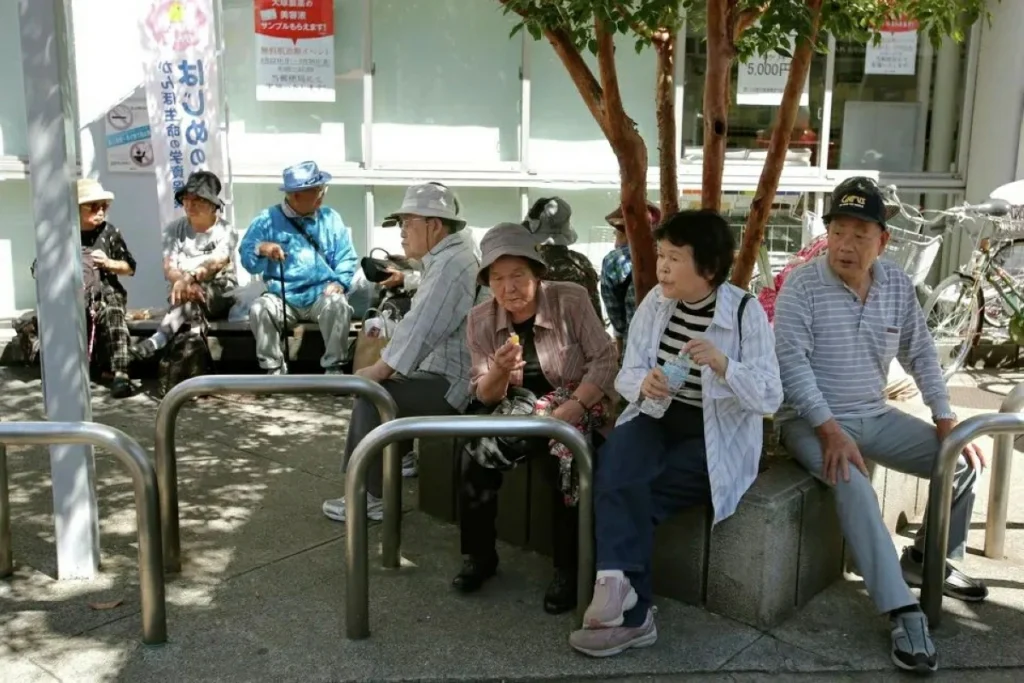
TOKYO — The number of people aged 100 or older in Japan surpassed a record 100,000 this year, the country’s health ministry said on Tuesday, underscoring the country’s rapidly aging and declining population.
The Health and Welfare Ministry statistics released on Tuesday show Japan now has 107,677 centenarians, up 7,914 from the previous year and exceeding the 100,000 mark for the first time. Nearly 88% of them are women.
The oldest woman is Kishimoto Fuyo, a 114-year-old from Kyoto City and the oldest man is Kato Hikaru, a 112-year-old from Kumamoto.
Health Minister Kenichiro Ueno said he was “delighted that so many people are living long, healthy and active lives”, citing progress in medicine and technology.
But Ueno also warned of the challenge the country faces in maintaining a sustainable social security system.
Experts put the long lives of the Japanese down to several factors, including a healthy diet and an active lifestyle.
The island nation’s cuisine predominantly consists of fish, vegetables, and rice — and less saturated fat than many Western diets.
Japan has been aging for years and sales of adult nappies have been higher than those for babies for more than a decade.
Companies have also developed new products for the older population, including a powered exoskeleton to support moving various parts of the body and eyewear that automatically adjusts its focus.
Many younger people, however, are not optimistic about their future.
The National Institute of Population and Social Security Research last week released the results of a survey indicating more than 20% of both men and women who are single and aged between 18 and 34 have no intention of ever marrying, with nearly half saying they see no benefit in marriage.
Ueno acknowledged the reasons for marriage reluctance among young people include the high costs of raising and educating children and the mental and physical burden on working parents. He said the government will continue addressing their concerns and attempt to turn around problems related to Japan’s aging population and dwindling births.
Japan’s drastic population decline is inevitable, experts say, noting the country’s total fertility rate dropped to a record low 1.14 in 2025, far below the 2.1 children needed to be born to each Japanese woman to maintain the current population.
For a population to replace itself, each woman needs to give birth to 2.1 children on average. Last year Japan’s total fertility rate dropped to a record low of 1.14.
The total population is estimated to drop to 87 million by 2070, representing a 30% decline from its peak of 128 million in 2008, according to data from the National Institute of Population and Social Security research.
Residents aged 65 and older currently make up around 30% of the population and are expected to make up nearly 40% by 2070.
Japanese authorities have called the trend an “existential crisis” with Prime Minister Sanae Takichi describing the decline as a “quiet emergency”.
In 2025 Japan’s total population decreased in all 47 prefectures but two, and the rate of decline is accelerating.
The government’s many programs and subsidies to encourage young people to have more children do not appear to be boosting birth rates.
Experts say the reasons are complex, ranging from lower marriage rates and more women joining the workforce to the increased costs of raising children.
While immigration has risen in previous years, foreigners only make up around 3% of the population and opposition to accepting more has grown.
When Japan began its centenarian survey in 1963, there were 153 people aged 100 or over. That figure rose to 1,000 in 1981 and stood at 10,000 by 1998.
The most recent figures were released ahead of Japan’s annual “Respect for the Aged” public holiday, on which the government honors those turning 100 with a personal letter and traditional sake cup.
Studies have previously cast doubt on the validity of global centenarian numbers, suggesting data errors, unreliable public records and missing birth certificates may account for elevated figures.
Source: Saudi Gazette